
One of the best ways to discover a region is through its food, and Axarquía is no exception.
Nestled between the Mediterranean Sea and the mountains of eastern Málaga, this corner of Andalusia offers a rich culinary tradition shaped by centuries of history, local agriculture, and a lifestyle that revolves around sharing meals with family and friends.
From freshly grilled seafood on the coast to sweet mountain wines and tropical fruits grown under the Andalusian sun, Axarquía is a destination that rewards curious food lovers. Many visitors arrive expecting beautiful landscapes and charming villages, only to leave talking about the meals they enjoyed along the way.
If you’re planning a visit, here are some of the local flavours that deserve a place on your itinerary
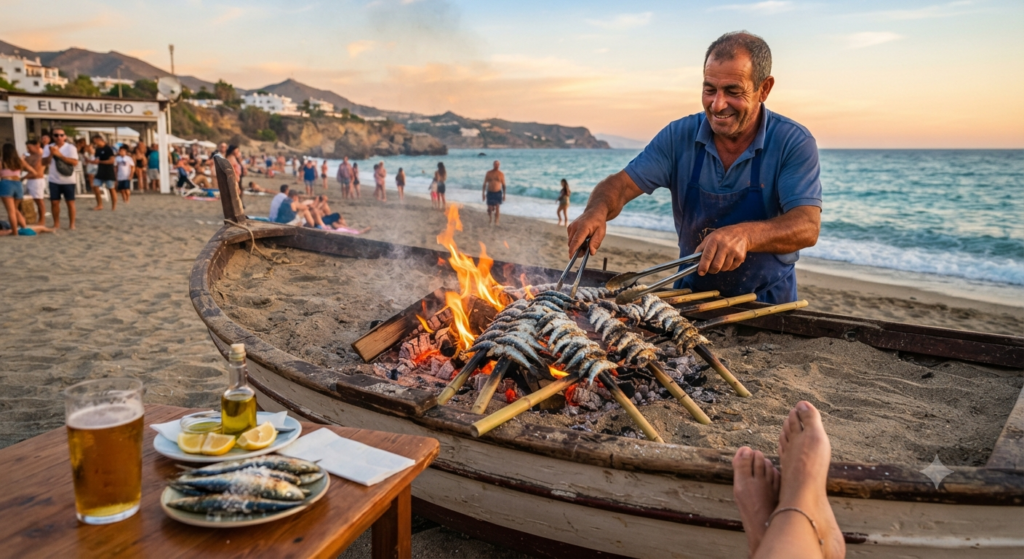
Espetos: The Taste of the Mediterranean
No visit to Axarquía would be complete without trying espetos de sardinas.
This traditional dish consists of fresh sardines skewered on long bamboo sticks and grilled over an open fire, often directly on the beach. The technique has been passed down through generations of fishermen and remains one of the most iconic food experiences along the Costa del Sol and Axarquía coastline.
The simplicity is what makes it so special. Fresh fish, sea salt, olive oil, and the smoky flavour from the fire create a dish that perfectly captures Mediterranean living.
Many locals will tell you that the best espetos are enjoyed barefoot in the sand, with a cold drink in hand and the sound of the waves nearby.
Did You Know?
The tradition of cooking sardines over open fires dates back to the nineteenth century, when fishermen would prepare their catch directly on the beaches after returning from sea.
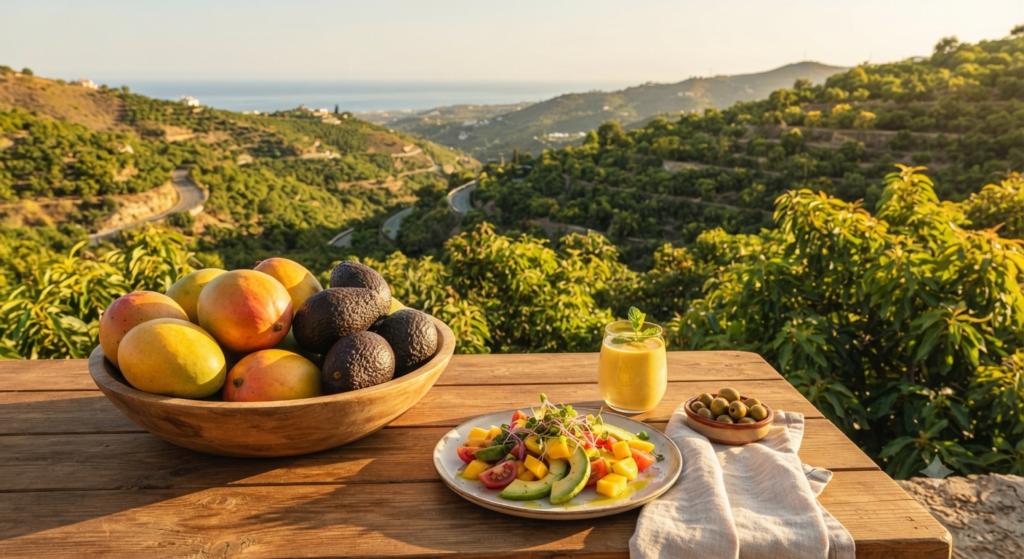
Mangoes and Avocados: The Tropical Side of Andalusia
One of the things that makes Axarquía truly unique is its subtropical climate.
Thanks to the protection offered by the surrounding mountains, the region enjoys conditions that allow tropical fruits to thrive. Mangoes and avocados have become some of Axarquía’s most important agricultural products and are exported throughout Europe.
Driving through the countryside, visitors are often surprised to see hills covered with avocado and mango plantations rather than olive groves alone.
Local restaurants have embraced these ingredients, incorporating them into fresh salads, tapas, and innovative Mediterranean dishes that celebrate the flavours of the region.
The best time to experience the mango harvest is during late summer and early autumn, when local markets are filled with freshly picked fruit.
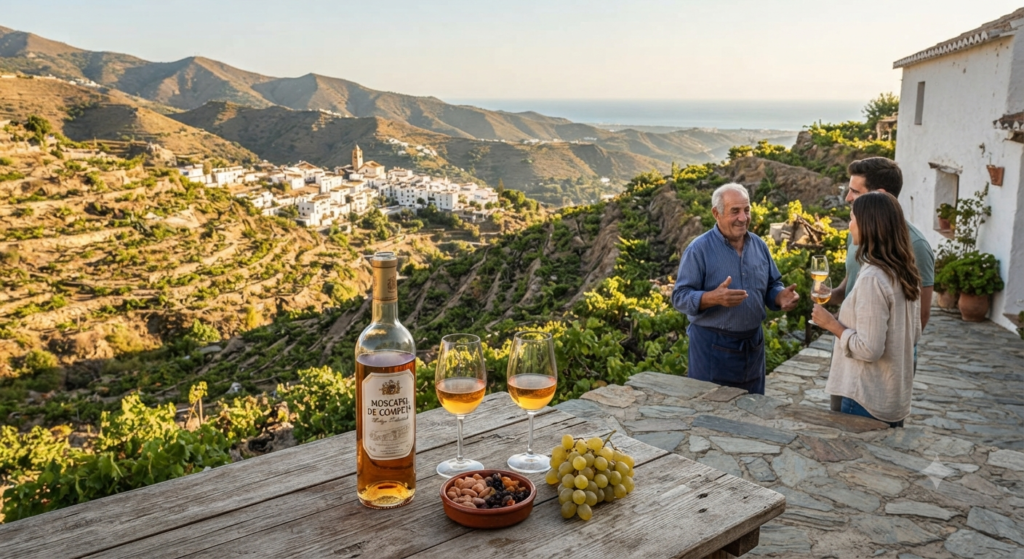
Sweet Moscatel Wine: A Tradition That Lives On
The hills around villages such as Cómpeta, Sayalonga, and Almáchar have been producing Moscatel grapes for centuries.
The sweet wines made from these grapes form an important part of Axarquía’s cultural identity and are often served during celebrations, festivals, and family gatherings.
Walking through the mountain villages, you’ll notice steep terraces covered with vineyards that have been cultivated using traditional methods passed down through generations.
Many local wineries welcome visitors for tastings, offering an opportunity to learn about the production process while enjoying spectacular mountain views.
Even for those who are not wine enthusiasts, the experience provides a fascinating glimpse into rural Andalusian life.
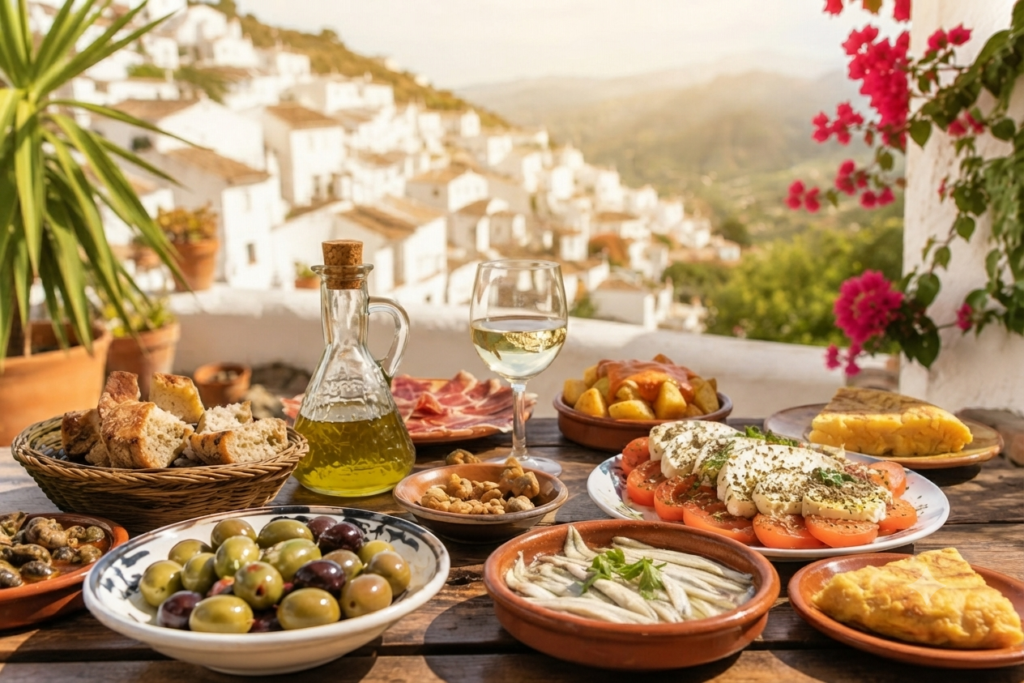
Traditional Tapas Culture
In Axarquía, eating is rarely rushed.
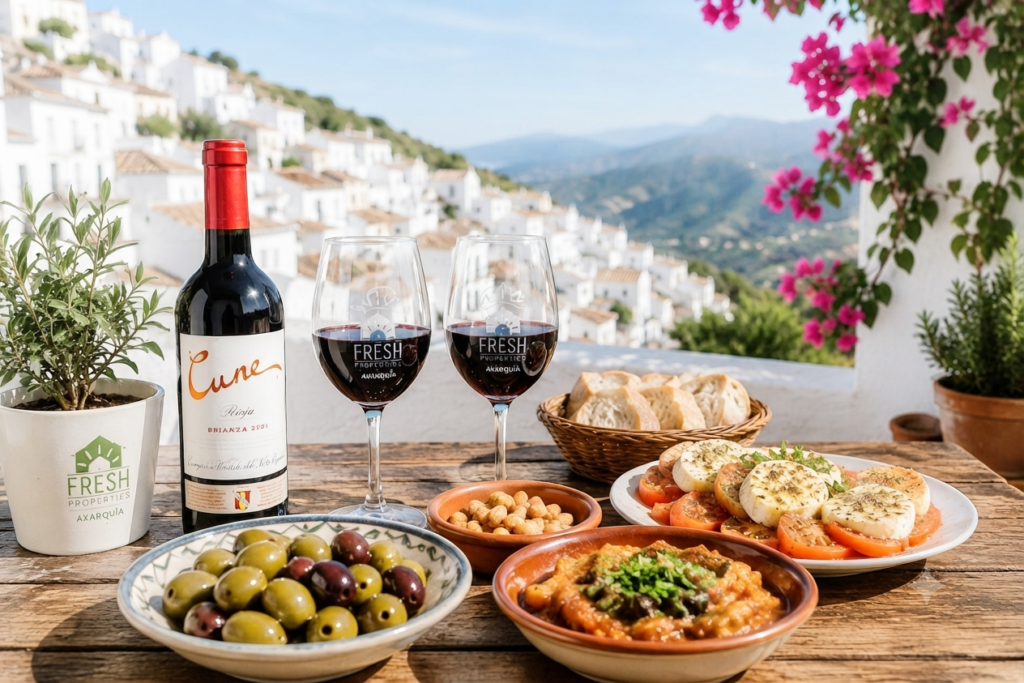
Meals are social occasions that bring people together, and tapas remain an important part of everyday life. From small family-run bars to village restaurants, sharing plates and conversation is simply part of the local culture.
Visitors quickly discover that every village has its own favourite dishes and hidden culinary gems. One evening might involve freshly caught seafood by the coast, while the next could be spent enjoying homemade stews in a mountain village square.
The joy comes not only from the food itself but from the atmosphere that surrounds it.
Many travellers say that some of their favourite holiday memories were created around simple meals shared with locals and fellow visitors.
Did You Know?
The tradition of serving tapas is believed to have originated in Andalusia, where small plates of food were placed over glasses of wine to protect them from dust and insects tapa literally means “cover” in Spanish.
Olive Oil: The Liquid Gold of Andalusia
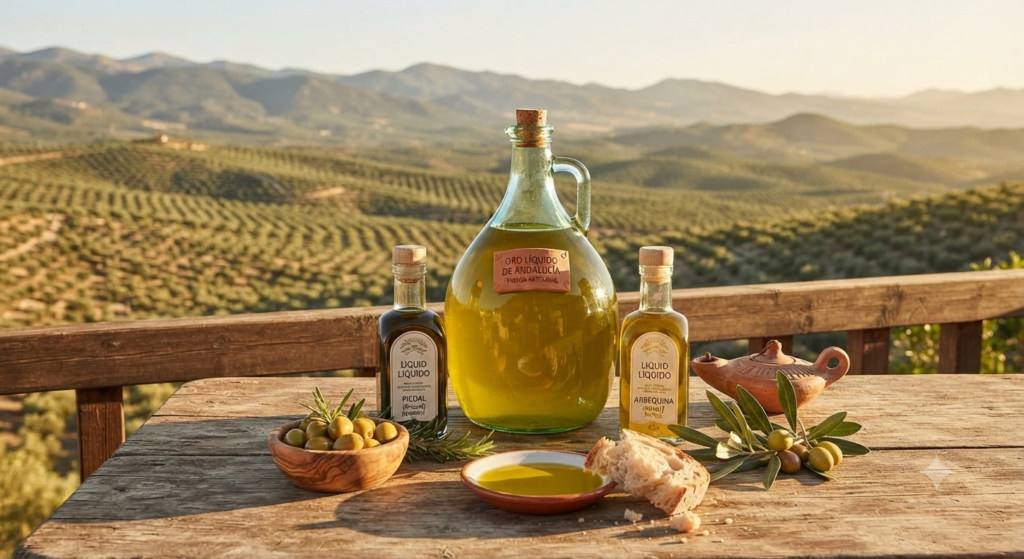
No discussion about Andalusian cuisine would be complete without mentioning olive oil.
Known locally as oro líquido or “liquid gold,” olive oil forms the foundation of countless dishes across the region. Whether drizzled over fresh bread, used in traditional stews, or added to local salads, its quality is something locals take great pride in.
Many small producers still harvest olives using traditional methods, preserving techniques that have been part of Andalusian life for centuries.
Visitors exploring inland Axarquía will often pass endless olive groves that stretch across the hillsides, creating some of the region’s most beautiful landscapes.
Discover Axarquía Through Its Flavours
The food of Axarquía tells the story of the region itself.
It reflects its Mediterranean roots, mountain traditions, agricultural heritage, and the warm hospitality of its people. Every meal becomes an opportunity to discover something new, whether it’s a family recipe that has existed for generations or a local ingredient you’ve never tasted before.
For visitors staying in one of our holiday homes, exploring local markets, village restaurants, and coastal chiringuitos is one of the best ways to experience the authentic spirit of Axarquía.
Because sometimes, the memories that last the longest are created around a table shared with good food, beautiful views, and great company.
FRESH PROPERTIES
Proudly powered by WordPress