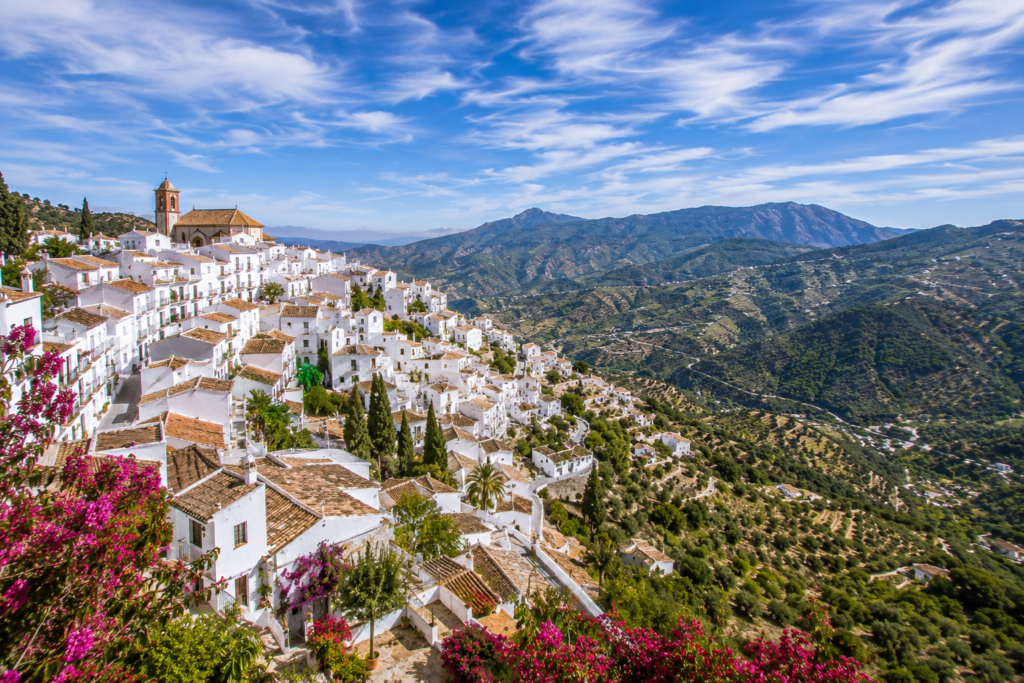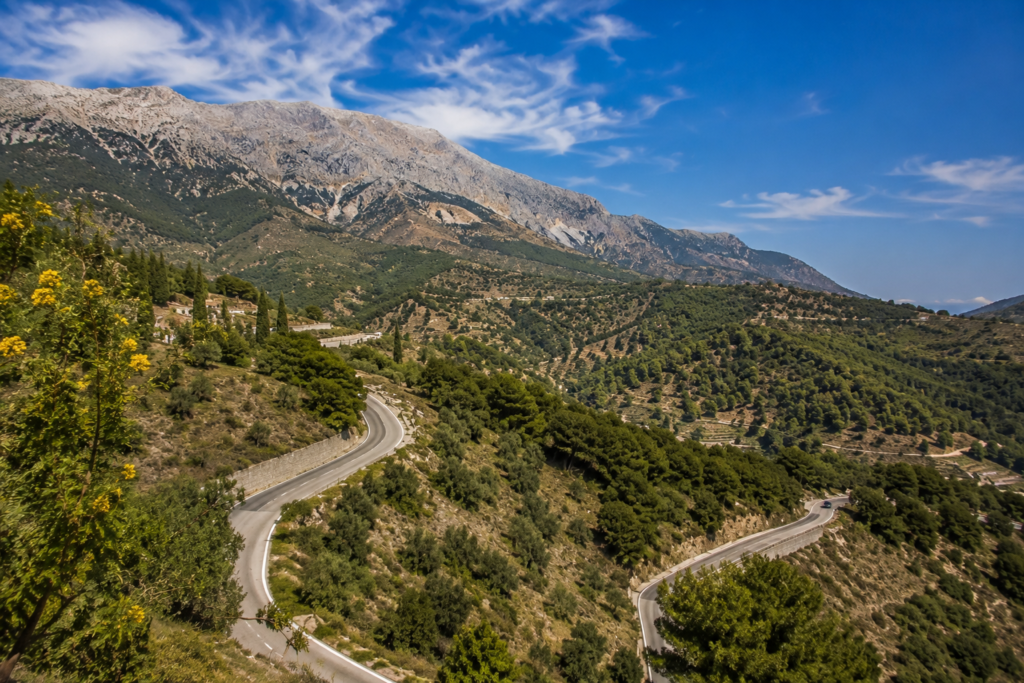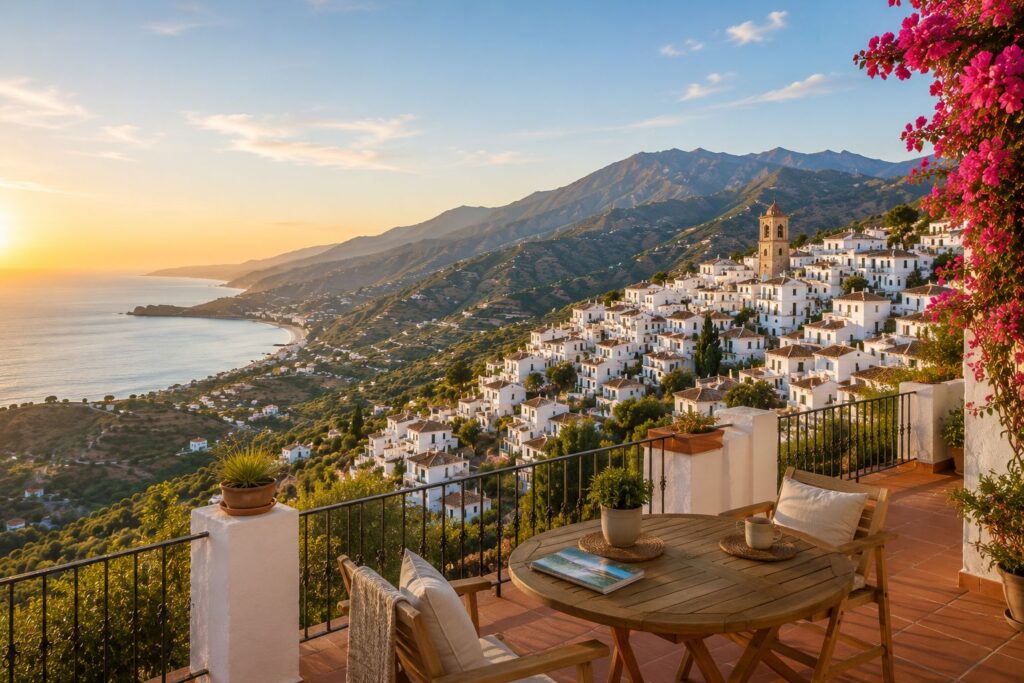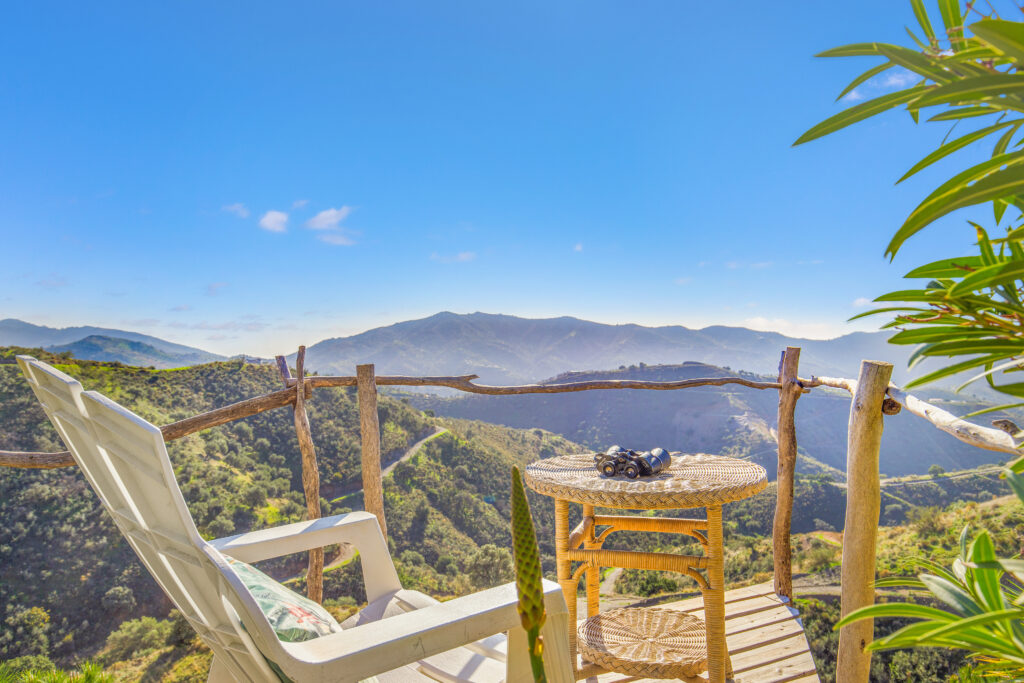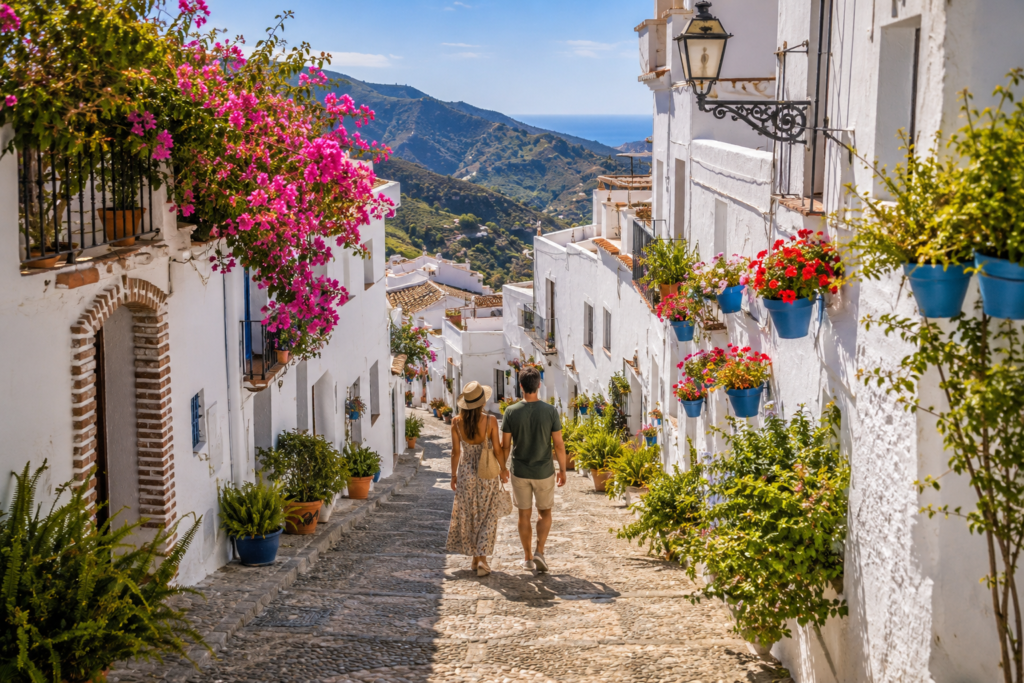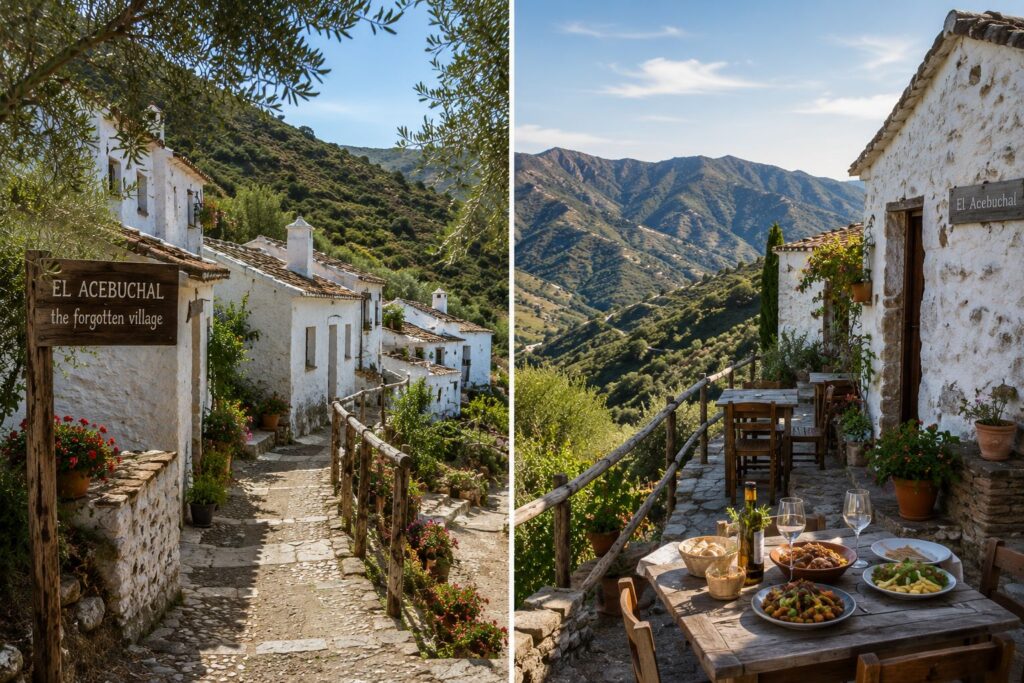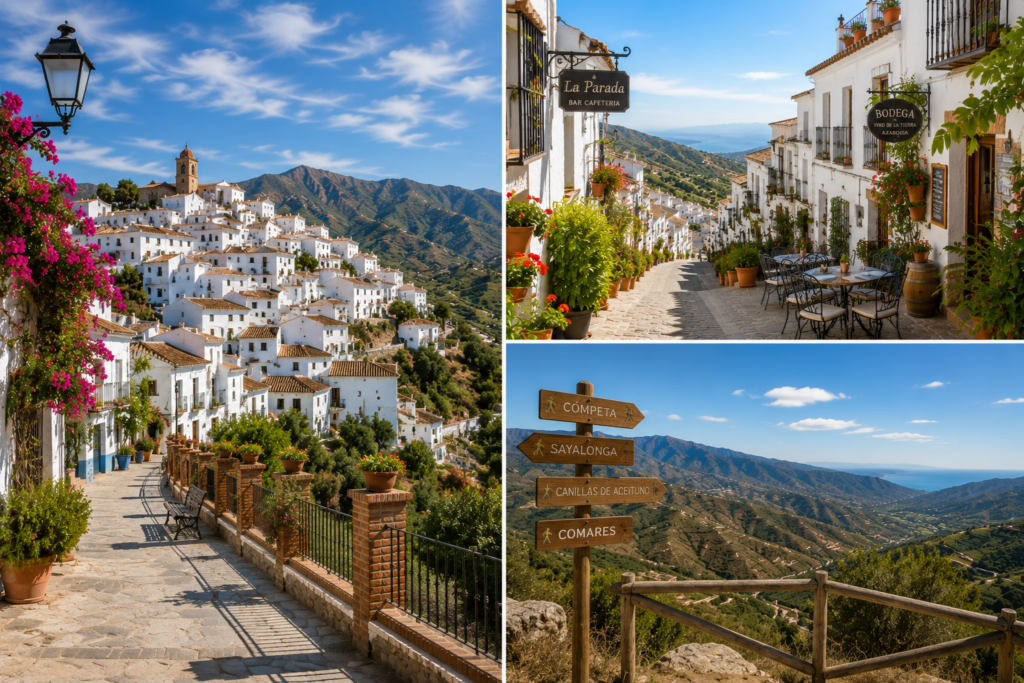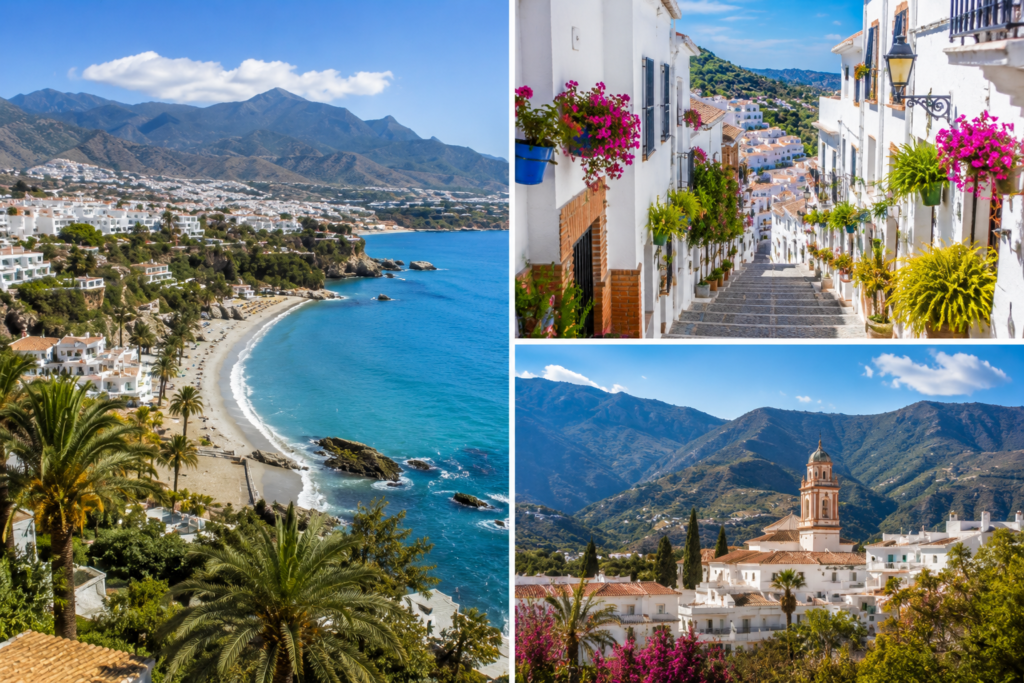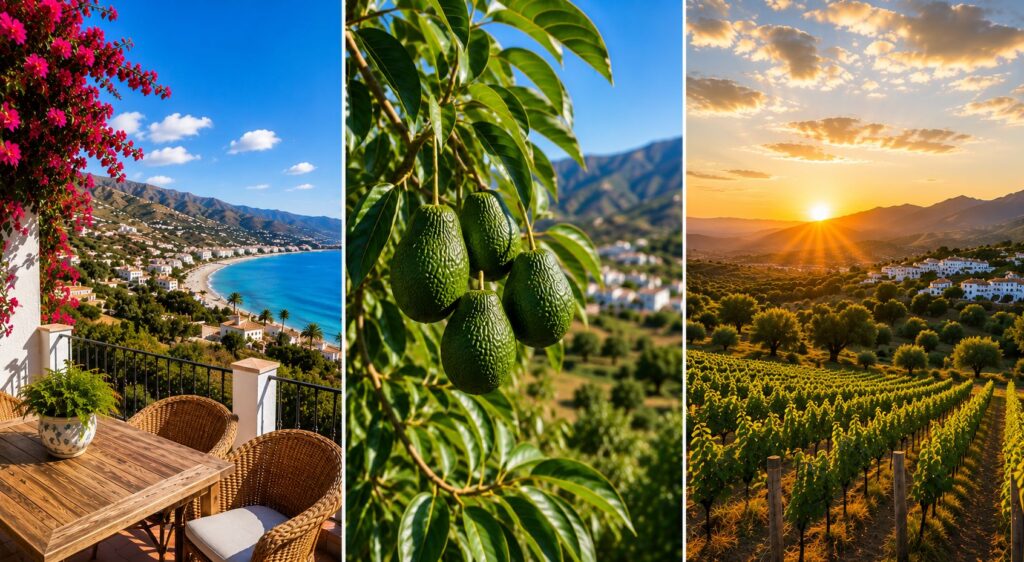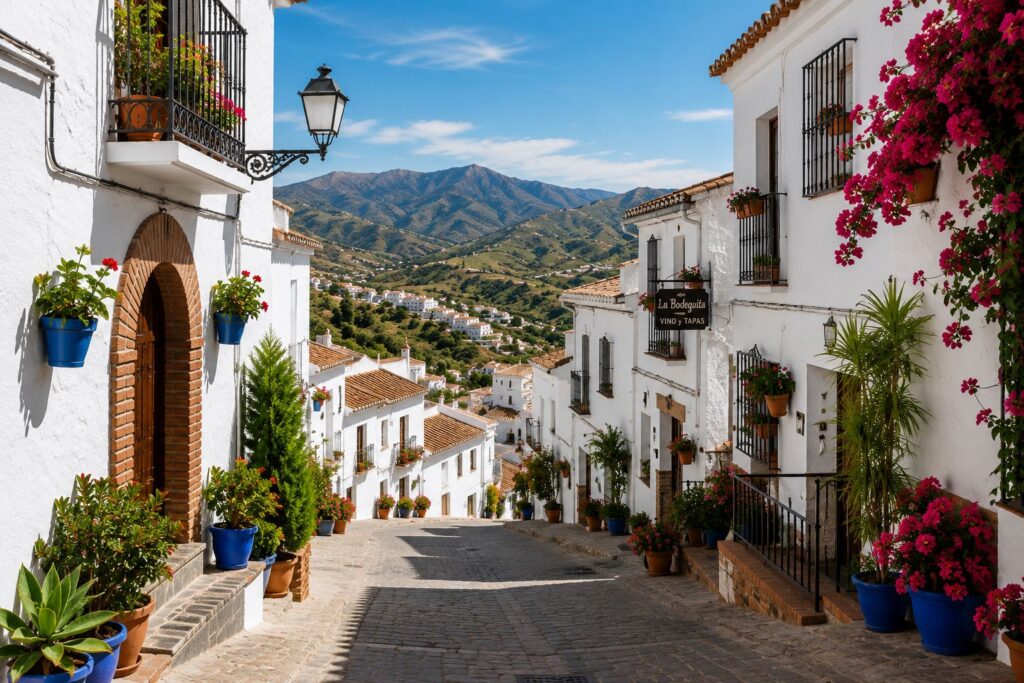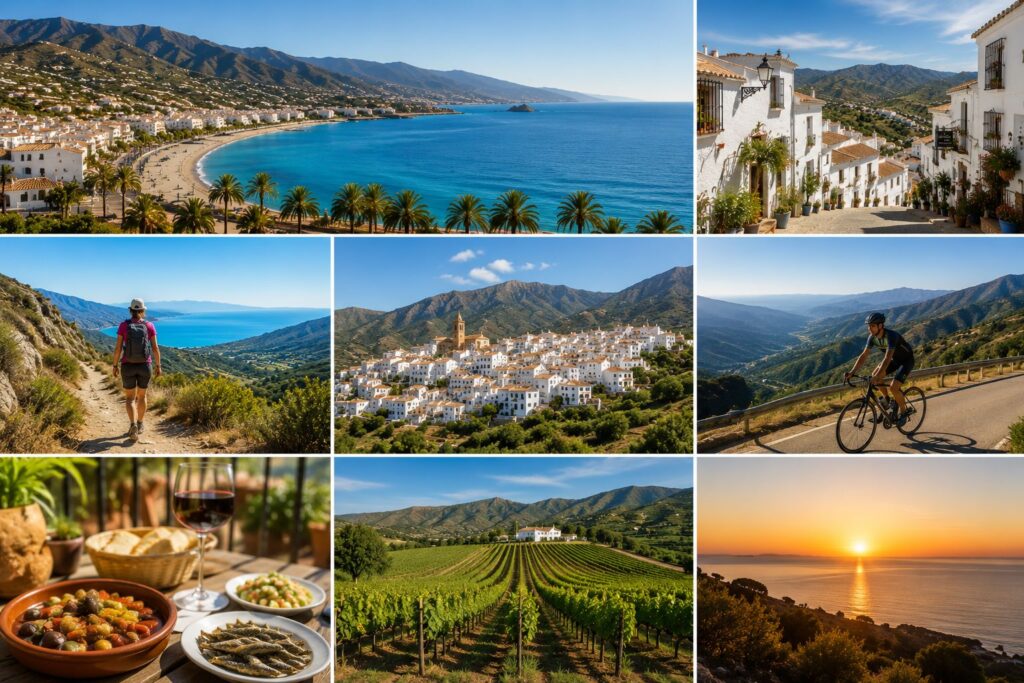
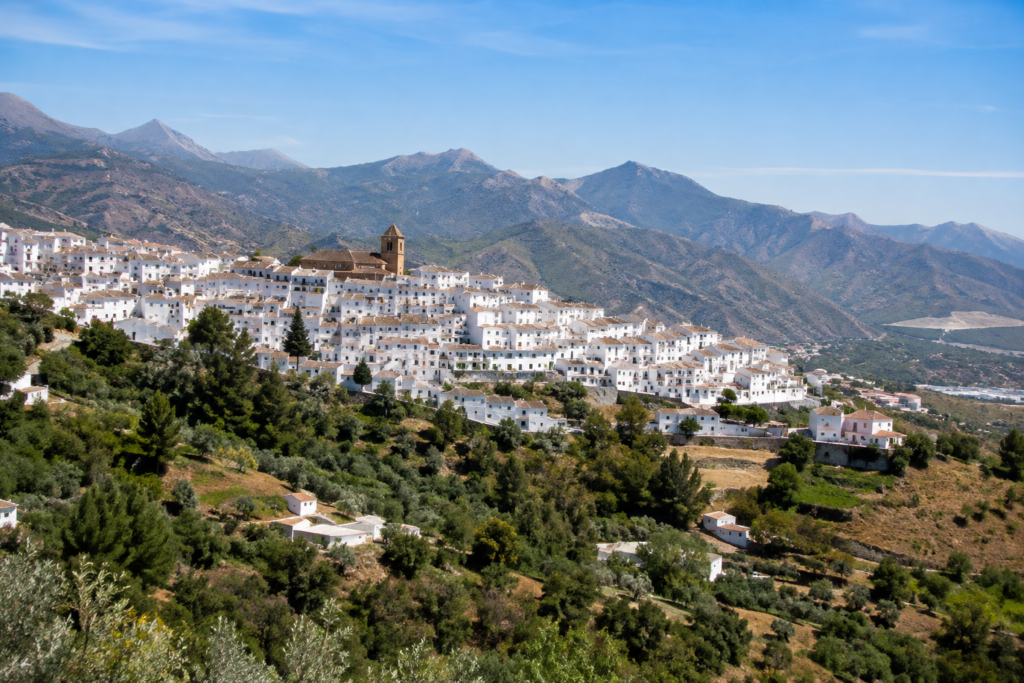
On the hills of Axarquía, surrounded by vineyards, olive groves and dramatic mountain scenery, Cómpeta is one of those Andalusian villages that can turn a simple day trip into something much more.
A lot of tourists come at first because they want to visit a white village. Visitors have dusky stereotypes that attribute an account to villages, where they expect whitewashed houses, narrow streets, mountain views and maybe lunch at the village square. What they often do discover is a place with a character of its own, a village where traditional Andalusian life, international influences, nature and a centuries-old legacy with wine all come together.
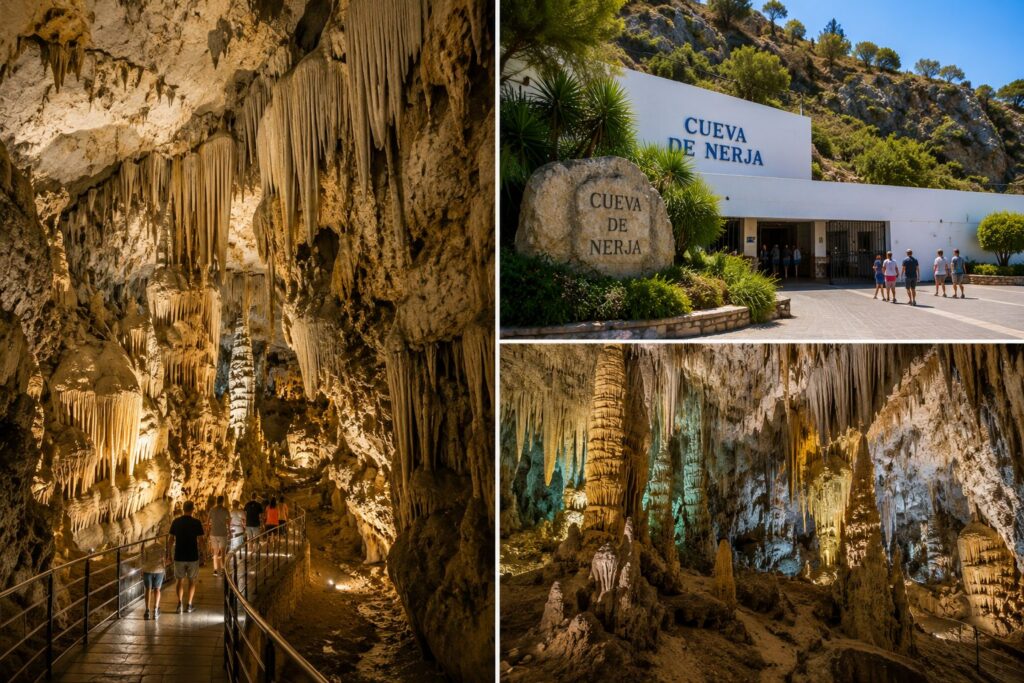
Cómpeta also occupies an interesting position within Axarquía. You have mountains and countryside around you, yet the Mediterranean coast and destinations like Torrox and Nerja remain within reach. The official tourism route of Andalucía through Axarquía includes Cómpeta along with Canillas de Albaida, Torrox, Frigiliana and Nerja, which shows how naturally it fits in.
So for visitors Cómpeta would be a holiday for hiking, village life, food and drink and seaside relaxation. For those thinking of buying a holiday home, Cómpeta could mean an interesting holiday rental market that isn’t solely just focuses on beach holidays. So whether you are planning a first visit, thinking of a longer stay or curious about what owning a holiday property in Cómpeta might be like, here’s everything you need to know.
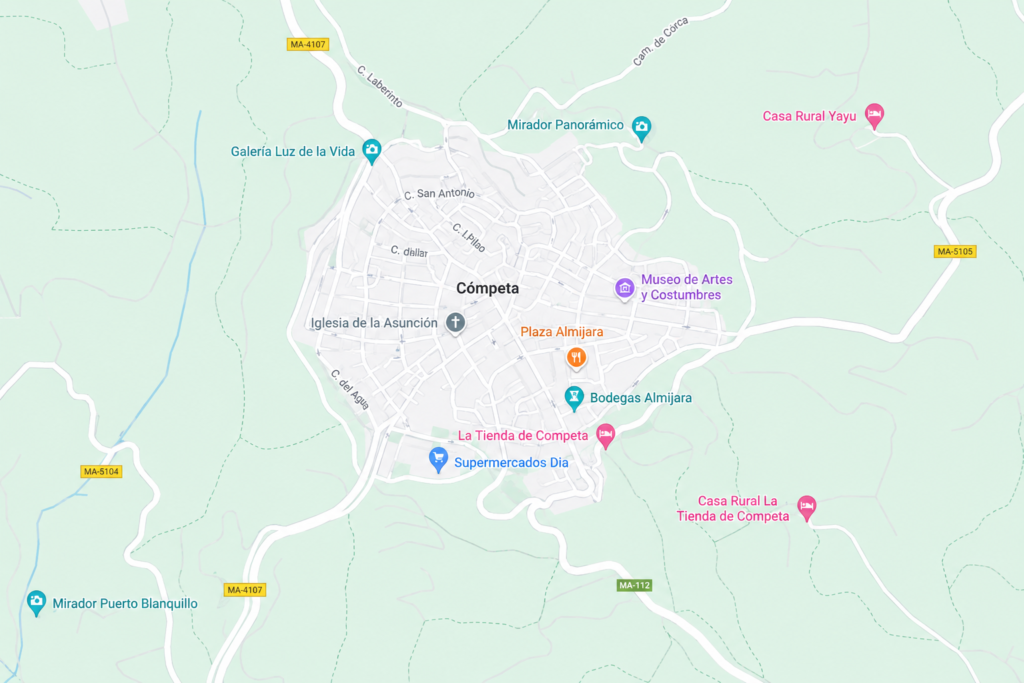
1. Discovering Cómpeta
I can definitely say that one of the pleasures of visiting Cómpeta is the journey itself.
The moment you depart from the coastal area and journey inland, everything becomes different. The frantic activities on the coastline become a thing of the past, making way for slower roads that wind their way uphill to the tops of hills. You will come across charming traditional houses, ancient olive trees, and neat rows of almond and vine trees basking under the sun. All you need to do is keep moving up, and everything will be clear in front of you.
The white washed village starts to come into view in contrast to the mountains.
This place is quite different from the sort of tourist destination which lies right on the coast of the Mediterranean. One has a feeling of being much closer to the surrounding countryside, with the narrow streets threading their way through the villages and out into views of the mountains beyond.
Cómpeta makes an ideal base to visit some of the other villages in inland Axarquía. Nearby towns, such as Canillas de Albaida and Sayalonga, can be included in the itinerary along with Torrox, Frigiliana, and Nerja where there are the mountains as well as the beaches to visit.
It is this very nature of Cómpeta which makes one realize that there is no need to choose between a holiday in the interior and a holiday on the Costa del Sol.
One can experience both!
2. The heart of the village: Plaza Almijara
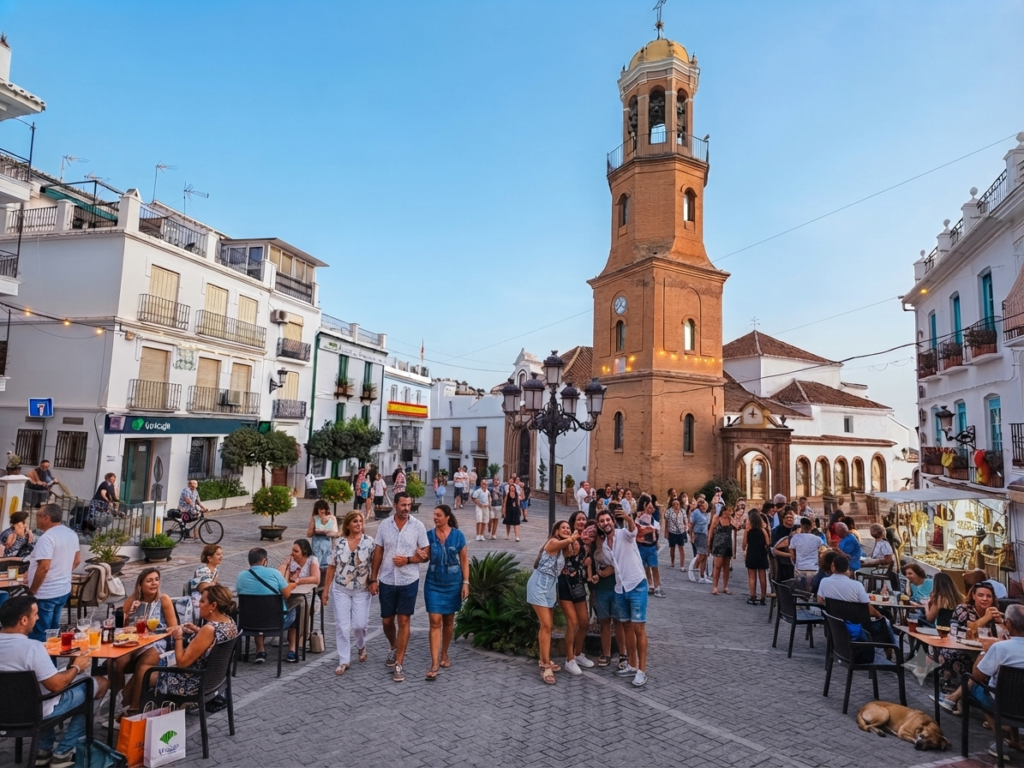
Finally, a walk through Cómpeta always ends near Plaza Almijara.
The square is one of the natural meeting points in the village , it is a square surrounded by traditional buildings, cafes and restaurants. It is the kind of place where a brief stop for coffee could very well evolve into spending hours there. Instead of ticking off your attraction list, allow yourself to spend some time exploring.
Go through narrow alleys coming from the square. Look up at balconies filled with flowers, typical facades and other interesting sites. Stop at small shops. Climb to one of the viewpoints offering views over the scenery around you. Trust me, this slower style of exploring is part of the experience.
In most places, travelers try to visit as many attractions as possible during their stay. Cómpeta is the place which is opposite as some of the best experiences are those when you just relax in the square, enjoy your meal while watching the daily life around you. And it is precisely this experience that attracts tourists again and again.
3. Wine, Vineyards and a Heritage That Makes Cómpeta Unique
When looking for ways to describe what makes Cómpeta special, there is another factor that cannot be forgotten and it is the connection between the village and the world of wines.
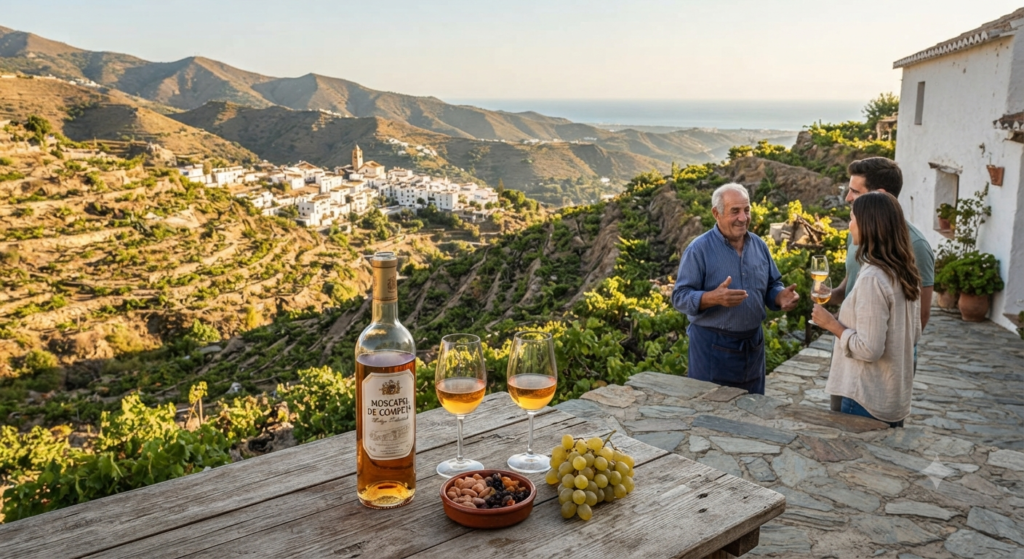
Viticulture heritage in Axarquía is well known, but the village that really stands out when it comes to Moscatel wines is Cómpeta. The hills in which Cómpeta is situated are part of the agricultural and local traditions’ landscape.
For the villagers of Cómpeta, the production of wines is not just about having something on the table in their restaurants. It is a story that the landscape tells on its own when people explore the surroundings of the village. Vineyards grow along the olive and almond trees on steep hills, creating an ever-changing landscape.
For those who are into the gastronomic side of tourism, this aspect is very fascinating since visiting this village is also the way to figure out the reasons why the wine is produced here.
And once a year, that relationship between the village and its wine becomes impossible to miss.
4. Visiting Cómpeta in August? Don’t Miss Noche del Vino
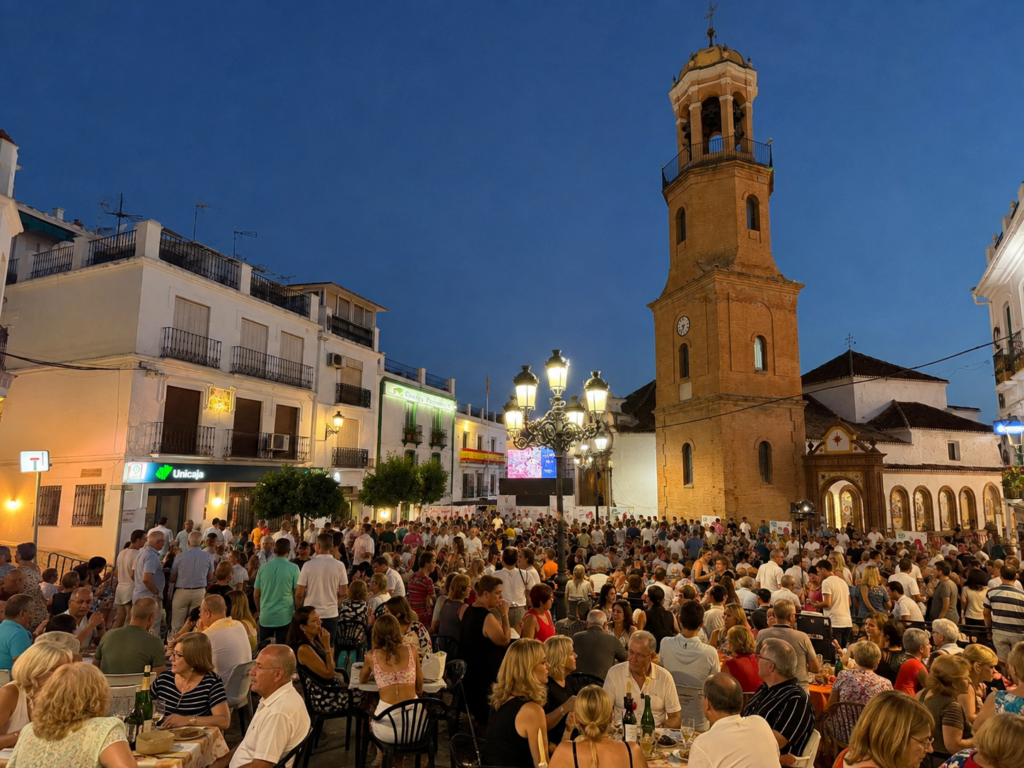
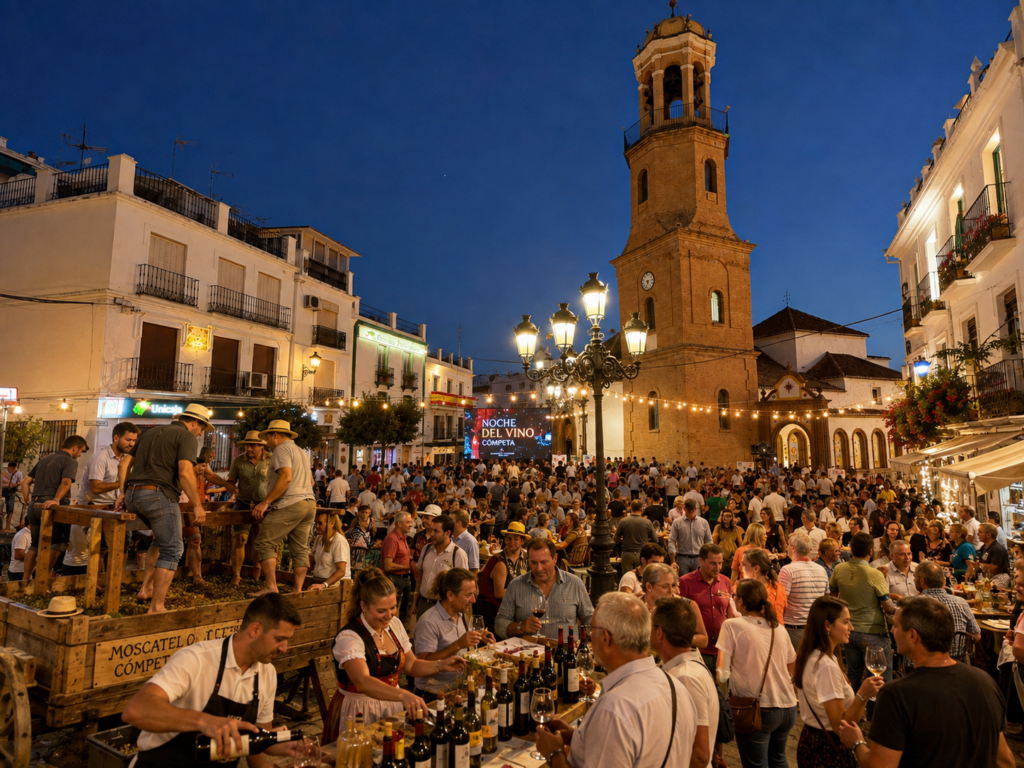
Each year, the village hosts Noche del Vino, the Night of Wine and this is one of the most famous celebrations in Cómpeta.
This tradition is deeply connected to the grape harvest in the region. According to the tourism organization of Andalucía, the 15th of August used to be the date when agricultural workers prepared for going to the countryside for starting the grape harvest. Nowadays, the celebration can trace its origins to the year 1974 when the local inhabitant, Aurelio Fernández Navas, offered wine to the people in the village. From spontaneous activity it turned out to become one of the most famous traditions of Cómpeta.
Nowadays, it is a celebration which combines wine, food, music and Andalusian culture. I can definitely hear the joyful energy pulsing through the air while writing this blog.
During the festivities, visitors can experience the traditional grape treading, local Moscatel wine, migas, verdiales and folk music, alongside flamenco and other cultural performances. Official tourism information places activities around Plaza de la Vendimia and Plaza Almijara, bringing the celebration right into the heart of the village.
What is special about this celebration is that it is not simply a wine festival organized for visitors but it is a celebration of something that formed the identity of the village for many years.
So, if you come to Axarquía for the first time, this is your chance to find out another side of this region which is much different from the familiar beaches of Costa del Sol. You’ll have an opportunity to experience local music, food and agriculture traditions here.
If you are coming to the celebration, we suggest you plan your trip in advance. Local celebrations can attract much more people in small villages than usually you can meet there even in summer time, so the accommodation, transportation and parking are the things to think about in advance.
And, of course, Noche del Vino shouldn’t be the only reason of your visit to the village. Come here in advance to have enough time for discovering Cómpeta itself.
Official Andalucía Tourism information for Noche del Vino
5. Cómpeta Beyond the Festivals
Although Noche del Vino may be the best known festival in Cómpeta, the village should not be considered somewhere only worthwhile to visit for a festival occasion.
Actually, what makes this village so unique is the way it changes according to the time you visit.
If you go to this beautiful little town on an ordinary weekday morning, everything will be quite different from how it would be on other occasions. Local people meet each other and have their coffees, local shops start working, people talk to each other on the streets, and hikers start getting ready for hiking around the nearby areas.
If you come to Cómpeta in the summer time, the evenings there will continue very late at night due to the hot weather, which makes the terraces and village squares the most natural gathering places.
If you come to this town in quiet times, you will find another Cómpeta, which is especially attractive for tourists who love to hike, couples and long-term holiday makers.
This diversity is not only important for tourism in general, but also for holiday homeowners.
6. Nature and Hiking around Cómpeta
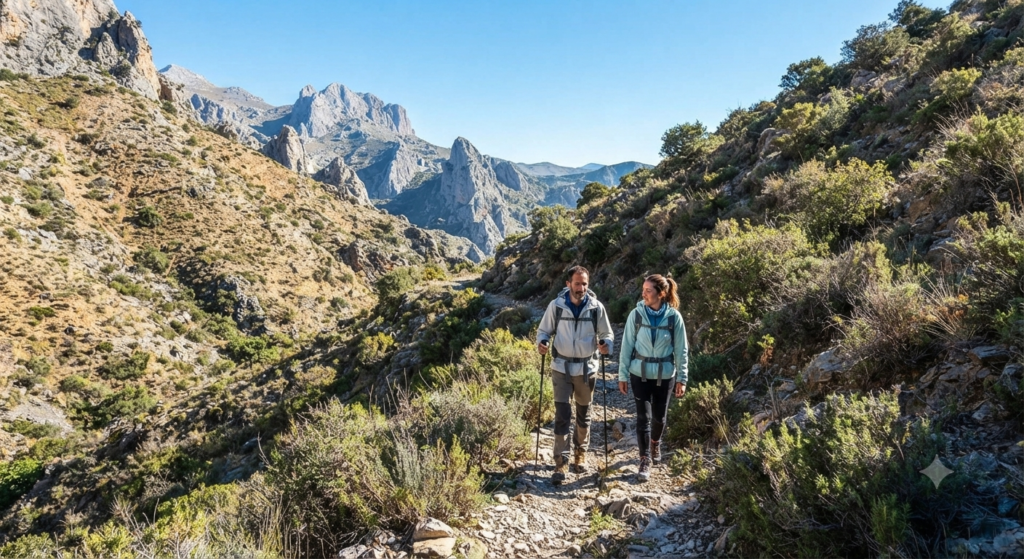
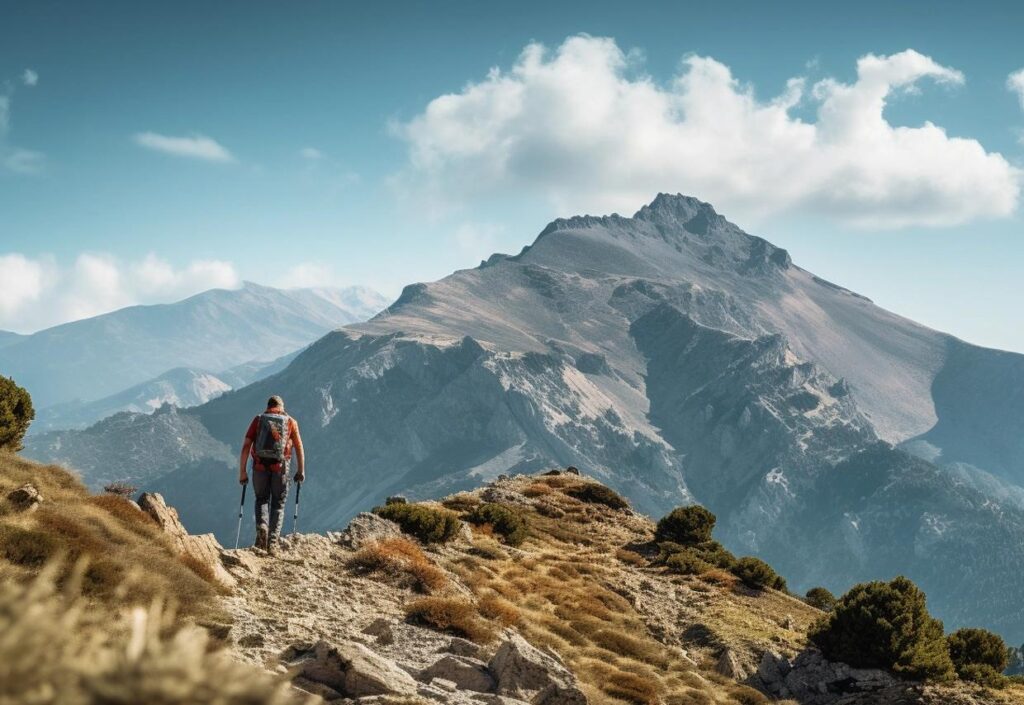
For many visitors, the real adventure only begins when the village ends. This is because the village of Cómpeta is near the spectacular mountains of Sierras de Tejeda, Almijara y Alhama, and is hence especially attractive to hikers.
The difference between the coast and this part of Spain is quite noticeable.
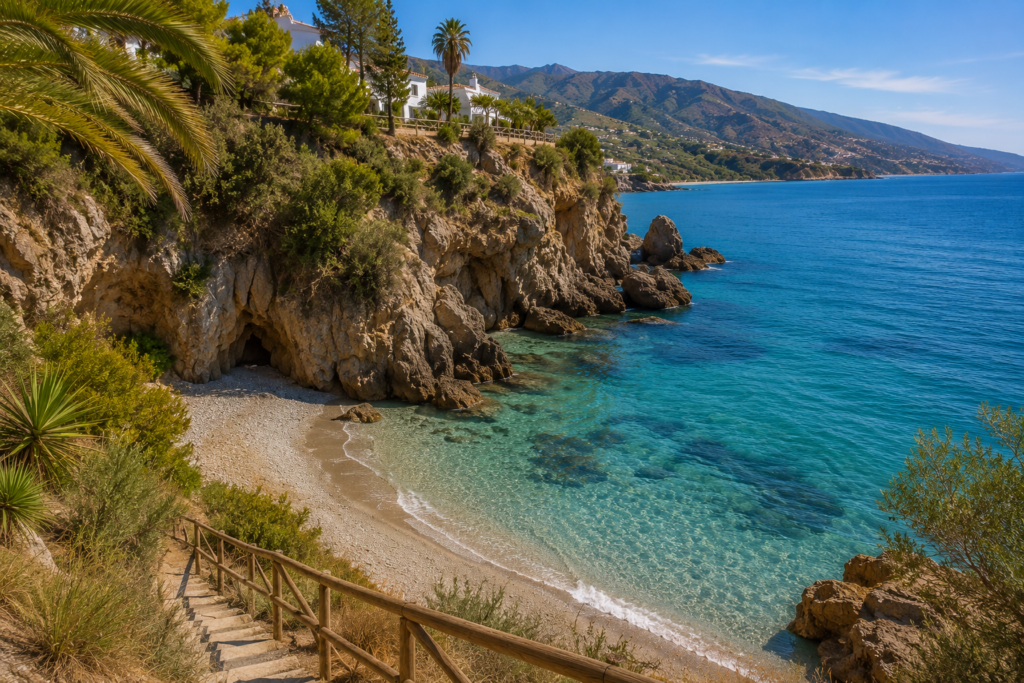
In one visit, one can swim in the Mediterranean Sea near Nerja or Torrox, and in another visit, walk through the mountain scenery of the Sierras, with totally different landscape and vegetation.
This variety makes it possible for vacationers to have greater flexibility when planning vacations. It is not necessarily required to spend a whole week at the swimming pool, unless it is what you really intend.
For those visitors who wish to travel actively, spring and fall are ideal times to visit the region since visiting the country side will become an integral part of their holiday.
For those who provide holiday accommodation, it would be wise to note this feature of the location. The priorities of a guest who chooses a rural villa near Cómpeta are definitely different from those of a visitor who rents an apartment next to the sea.
7. Eating and Drinking in Cómpeta
One of the easiest ways to understand Andalusian culture is through food.
Cómpeta is no exception.
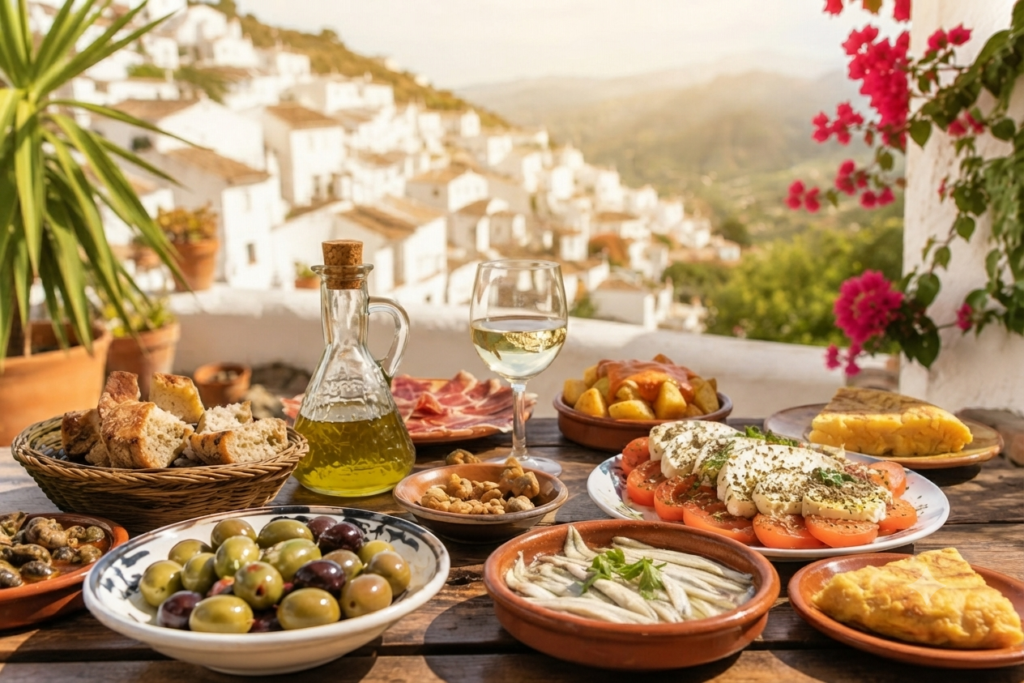
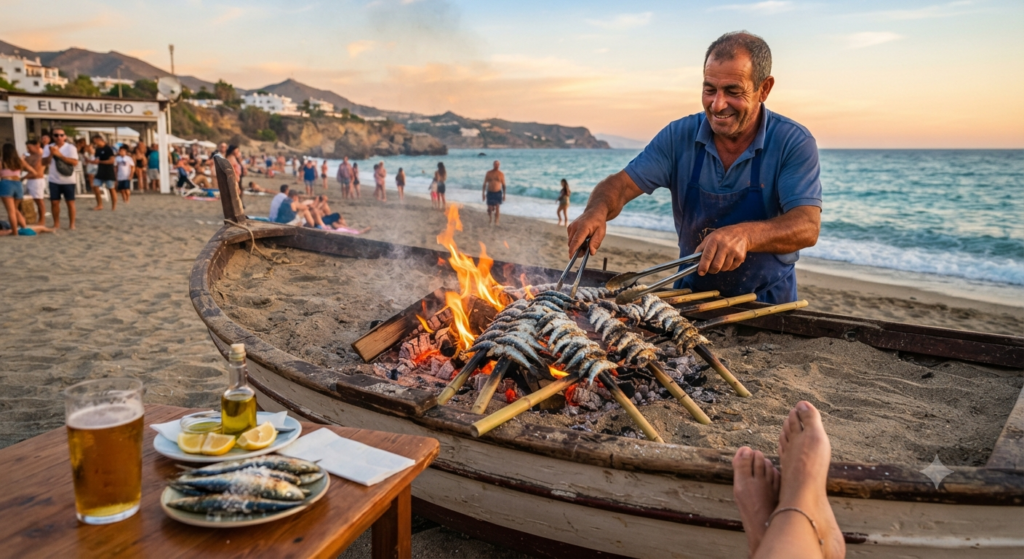
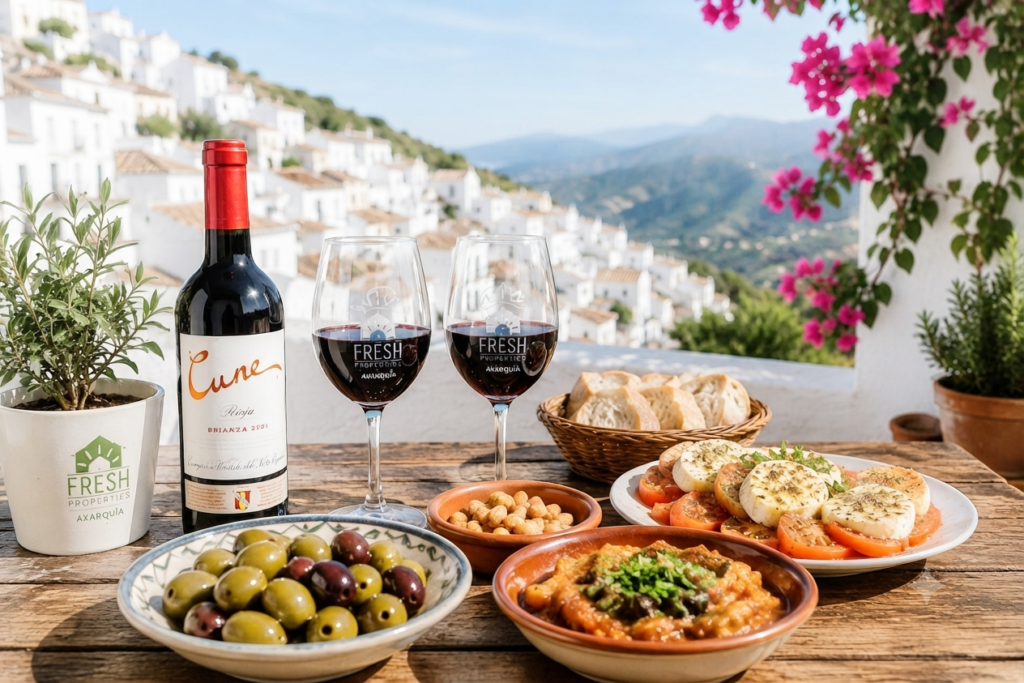
A relaxed lunch here can become an important part of the day rather than something squeezed between sightseeing stops. Traditional dishes, tapas, locally produced ingredients and regional wines all help connect visitors with the surrounding countryside.
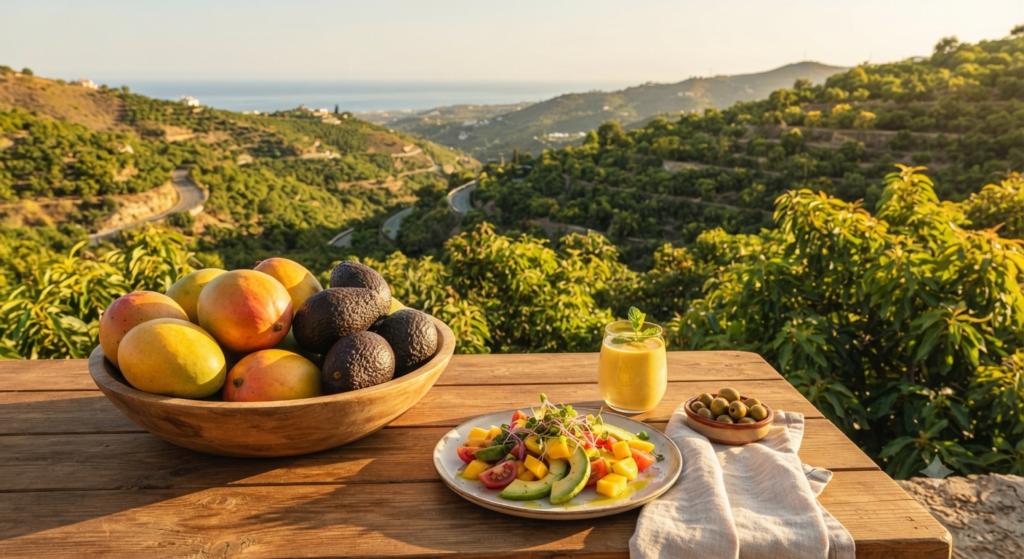
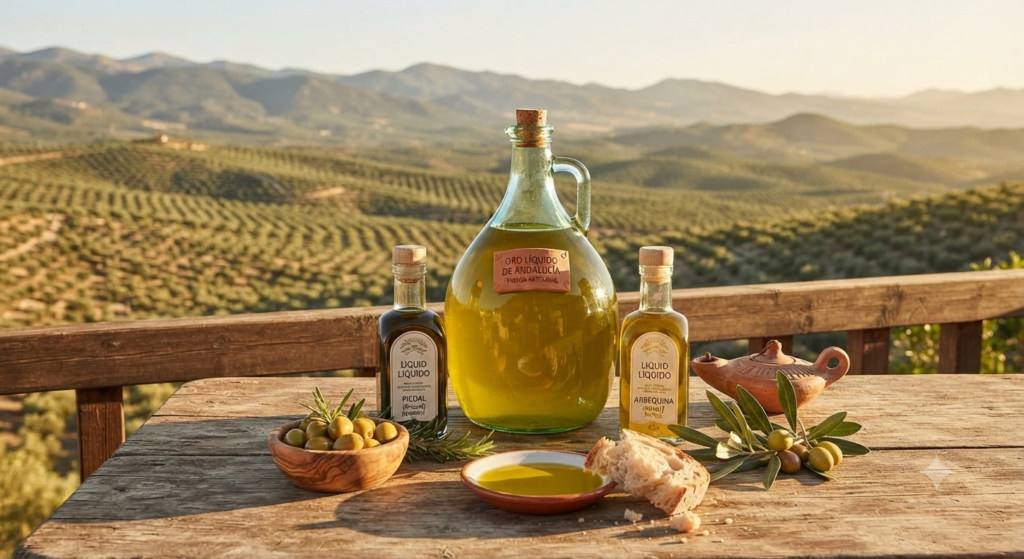
Moscatel is naturally part of the experience, but Axarquía’s wider agricultural landscape also produces olives, almonds and other Mediterranean crops.
During Noche del Vino, food becomes particularly connected with tradition. Andalucía’s tourism information notes local dishes and regional flavours associated with harvest celebrations alongside wine and music.
But you don’t need to visit during a festival to enjoy the local food culture.
Find a terrace, order something you’ve never tried before, and don’t worry too much about how long lunch takes.
That’s part of being here.
8. When Is the Best Time to Visit Cómpeta?
There isn’t really one correct answer.
Spring
Spring is ideal for travellers interested in walking, cycling and exploring the countryside. Comfortable temperatures make it easier to spend long days outside, while the surrounding landscape becomes part of the attraction.
Summer
Summer brings the liveliest atmosphere.
Visitors can combine days around a private pool or at the coast with evenings in the village. And, of course, August brings Noche del Vino, making it an especially interesting time for travellers wanting to experience local culture.
Autumn
As the intense summer period begins to ease, autumn offers another opportunity to explore the mountains, villages and gastronomy of inland Axarquía.
It’s an excellent time for visitors who prefer quieter surroundings and active holidays.
Winter
Winter reveals another side of Cómpeta.
While it isn’t beach weather every day, southern Spain’s generally milder climate attracts visitors looking to escape colder parts of Europe. For walkers, longer-stay guests and people who simply prefer travelling outside peak season, this can be an appealing time to discover the area.
That seasonal variety helps explain why inland Axarquía shouldn’t automatically be viewed as a summer-only destination.
9. Why Some Visitors Start Imagining Life in Cómpeta
Something interesting happens to people when they repeatedly visit places like Cómpeta.
The first trip is about sightseeing.
The second might be about returning to a favourite restaurant or walking trail.
Eventually, some visitors start paying attention to the houses.
They notice traditional village properties hidden along narrow streets. They see countryside villas surrounded by terraces and gardens. They begin imagining morning coffee with mountain views or spending several months of the year in southern Spain.
That’s when a holiday destination begins to feel like somewhere you could potentially call home.
Cómpeta’s appeal for second-home owners is easy to understand. It offers traditional village life and countryside while remaining connected to the wider Axarquía region and Mediterranean coast.
Of course, buying property is a much bigger decision than choosing a holiday destination. Location, access, maintenance, regulations, intended use and professional advice all need careful consideration.
But for many owners, the story starts in exactly the same way:
They visited.
They returned.
And eventually, they didn’t want to leave.
10. Is Cómpeta a Good Location for a Holiday Rental?
There isn’t a universal answer because every property and owner’s circumstances are different.
What Cómpeta does offer is access to several different types of traveller.
Summer visitors may be searching for private villas with pools and outdoor spaces.
Couples might prefer peaceful properties with spectacular views.
Hikers and cyclists may travel during spring or autumn.
Families may choose countryside accommodation because it offers more space and privacy than a traditional hotel.
Longer-stay visitors may prioritise reliable Wi-Fi, comfortable living spaces and practical amenities.
Food, wine and cultural tourism add another dimension.
This means successful holiday accommodation in Cómpeta isn’t necessarily about copying what works in Nerja or another coastal destination. Understanding why guests choose Cómpeta is important when positioning a property.
A beautiful villa alone isn’t enough.
The listing, photography, pricing, amenities, communication and guest experience all need to match the people you’re trying to attract.
11. What Do Guests Look for in a Cómpeta Holiday Home?
The details can make an enormous difference.
For countryside and village properties, guests often want clear information before they arrive. How easy is the property to reach? Is parking available? How far away are restaurants and shops? Is the road suitable for a normal rental car? How private is the swimming pool?
Then there are the fundamentals.
Comfortable beds, excellent cleanliness, reliable Wi-Fi, air conditioning where appropriate, attractive outdoor furniture and a well-equipped kitchen can strongly influence how guests experience a property.
Outdoor areas are particularly important in southern Spain.
A shaded terrace, comfortable dining area, swimming pool or beautiful view can become the place where guests spend most of their holiday.
And don’t underestimate local information.
Helping visitors discover a walking route, village market, traditional restaurant or local festival can transform a good stay into a memorable one.
That experience is what often leads to positive reviews and repeat guests.
12. Managing a Cómpeta Holiday Home From Abroad
Owning a holiday property and operating a holiday rental are two very different things.
The property itself may be in paradise.
The administration isn’t always quite as relaxing.
Guests need answers. Cleaners need schedules. Linen needs replacing. Pools and gardens need maintenance. Air-conditioning systems occasionally stop cooperating. Something will eventually break, usually when the owner is nowhere near Spain.
Then there are listings, photography, pricing, check-in information, reviews, guest questions and local requirements.
For owners living abroad, having someone locally who understands both the property and the destination can make an enormous difference.
At Fresh Properties, our role is to help remove that day-to-day pressure from holiday-home ownership. From guest communication and cleaning coordination to maintenance and local support, professional management allows owners to spend less time worrying about operations and more time enjoying their property.
Discover Fresh Properties Holiday Rental Management in Axarquía
13. Thinking About Owning Property in Cómpeta?
If you’ve visited Cómpeta and started wondering about owning property here, begin with the right questions rather than simply looking at beautiful houses.
How often will you personally use the property?
Do you want a village house or countryside villa?
Will you need a car?
Who will maintain the pool and garden when you’re away?
Do you intend to offer the property as holiday accommodation?
What regulations and registrations apply?
Who will support guests if something happens during their stay?
A property that works perfectly as a private second home isn’t automatically ideal as a holiday rental, so thinking about your objectives early can save a lot of difficulty later.
Professional legal, tax and property advice is also essential before purchasing or operating accommodation in Spain, particularly because requirements can change.
Considering a holiday home in Axarquía? Book a consultation with our local team.
Frequently Asked Questions About Cómpeta
Where is Cómpeta?
Cómpeta is an inland village in the Axarquía area of Málaga province in Andalusia. It sits among the mountains north of the Mediterranean coast and is part of a wider route through Axarquía that connects inland villages with Torrox, Frigiliana and Nerja.
What is Cómpeta famous for?
Cómpeta is particularly known for its whitewashed Andalusian architecture, mountain setting, Moscatel wine tradition and annual Noche del Vino celebration.
When is Noche del Vino in Cómpeta in 2026?
The official Andalucía tourism listing currently gives the date as 15 August 2026. The festival traditionally takes place annually on 15 August.
What happens during Noche del Vino?
Traditional grape treading, Moscatel wine, migas, verdiales, folk music, flamenco and other cultural performances form part of the celebration. Activities take place around Plaza de la Vendimia and Plaza Almijara.
Is Cómpeta worth visiting if I’m staying on the coast?
Absolutely. The mountain landscape and traditional village atmosphere offer a completely different experience from the beaches and promenades of coastal Axarquía. Combining both can be one of the best ways to understand the diversity of the region.
Is Cómpeta only worth visiting in summer?
No. Summer is lively, particularly around Noche del Vino, but the surrounding countryside also makes spring and autumn attractive for walking and active holidays. Quieter winter stays can appeal to visitors looking for a slower experience.
Do I need a car when staying in Cómpeta?
A car can make exploring the surrounding countryside, coast and neighbouring villages considerably easier. However, the answer depends on where you’re staying and what you plan to do, so guests should check transport and access before booking.
Is Cómpeta suitable for families?
It can be, particularly for families looking for spacious villas, pools, countryside and a quieter base away from busier resorts. Families should check individual property features, access and safety facilities when booking.
Is Cómpeta suitable for a holiday rental property?
Cómpeta attracts different types of visitors, including summer holidaymakers, walkers, couples, families and travellers interested in rural Andalusia. Whether a particular property will work well as a holiday rental depends on its location, amenities, condition, pricing, management and applicable regulations.
Can I manage my Cómpeta holiday home while living abroad?
It’s possible, but owners need reliable systems for guest communication, cleaning, maintenance, emergencies and property inspections. Many overseas owners therefore choose to work with a local holiday-rental management company.
What should I look for in a property manager in Axarquía?
Look beyond simply getting a property listed online. Local presence, responsive guest communication, reliable cleaning and maintenance coordination, transparent owner communication and knowledge of the surrounding area can all be important.
Discover Cómpeta for Yourself
Cómpeta isn’t simply another white village to photograph during a drive through Andalusia.
It’s somewhere worth experiencing slowly.
Come for the mountain views and you may discover the wine.
Come for Noche del Vino and you may discover the hiking.
Come for a week’s holiday and you may find yourself wondering what it would be like to stay for a month.
And for some people, that question eventually becomes:
What would it be like to own a home here?
That’s what makes destinations like Cómpeta so interesting. They work on several levels—as places to visit, places to return to, and for some, places to build a life or investment around.
At Fresh Properties, we’re here to help guests and homeowners experience the best of Axarquía, whether you’re searching for your next Mediterranean stay or looking for professional support managing a holiday property in the region.
Browse Holiday Homes in Axarquía
Discover Holiday Rental Management in Axarquía
Book a Consultation With Our Team
Explore More Fresh Properties Guides to Axarquía
Interested in the holiday-rental industry? Discover Fresh Properties Franchise Opportunities