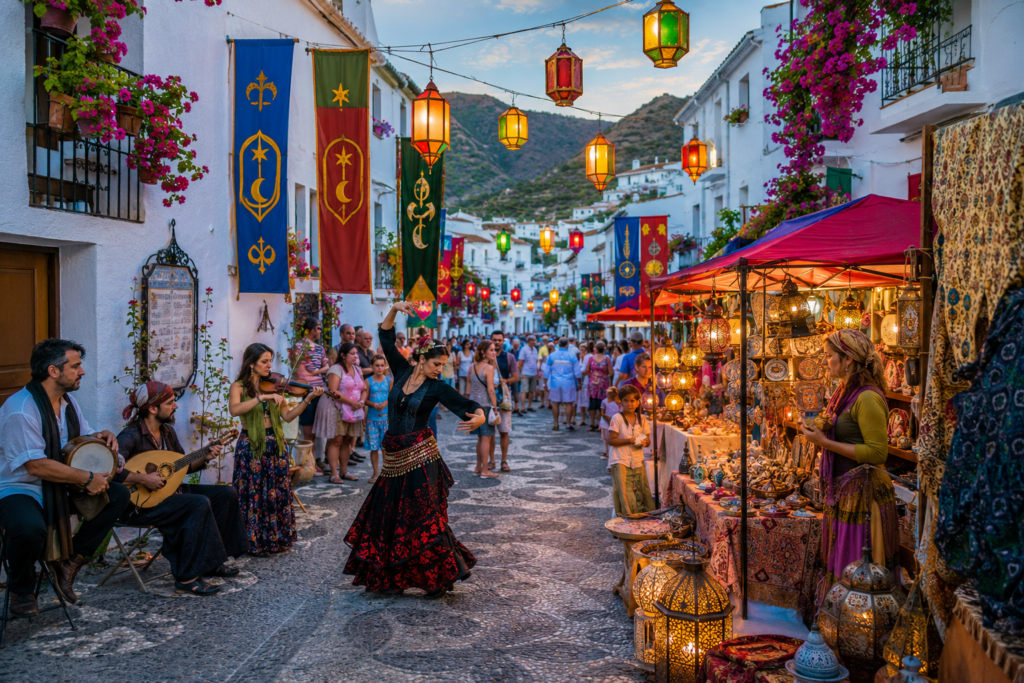
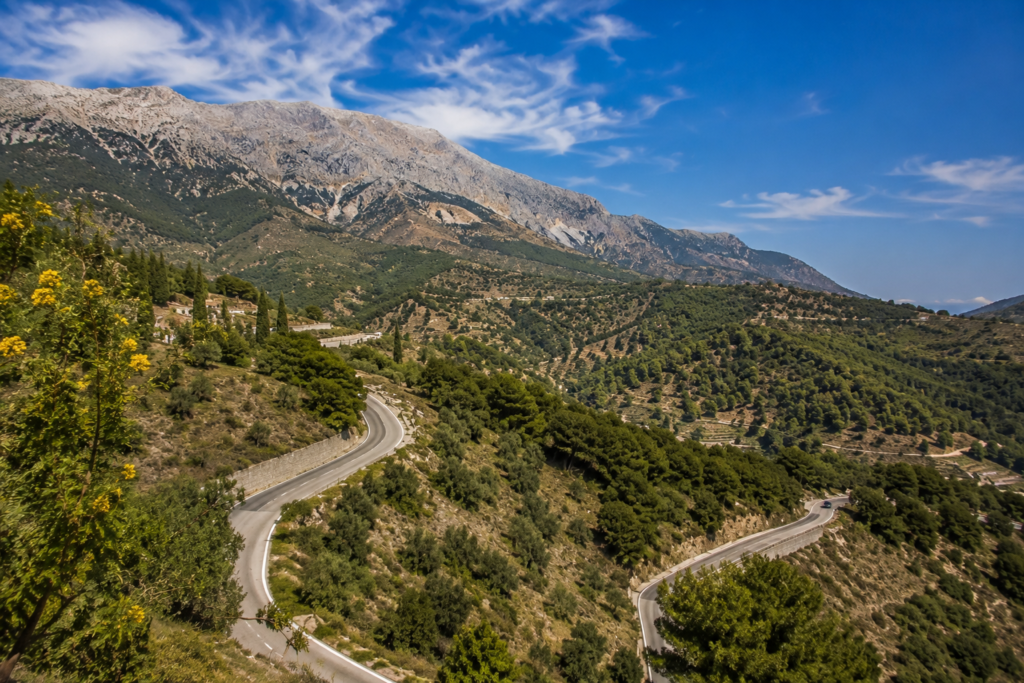
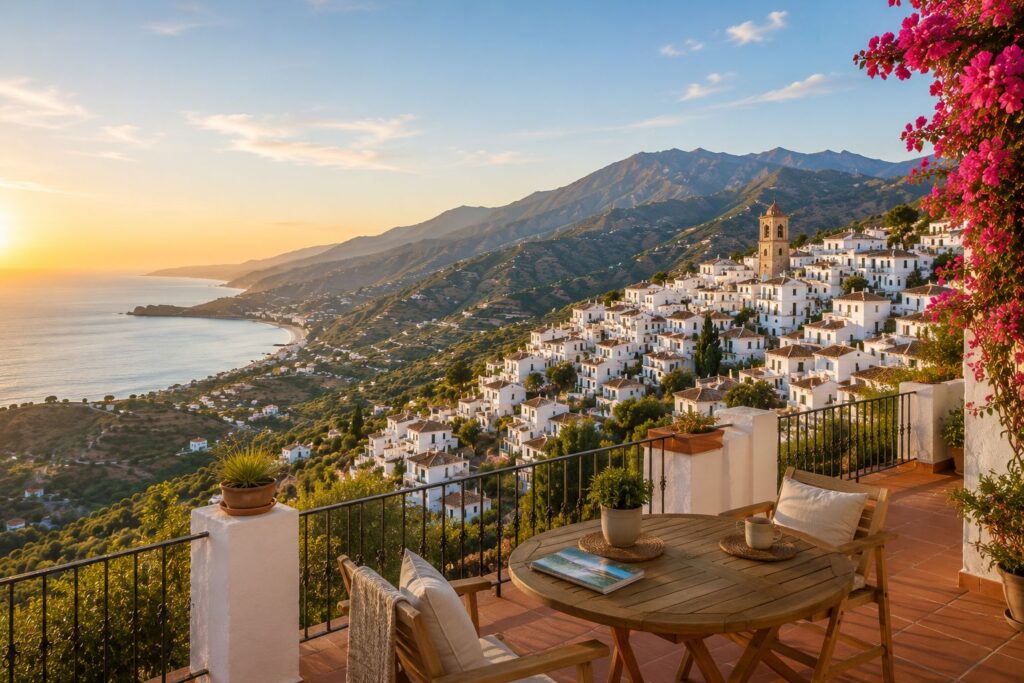
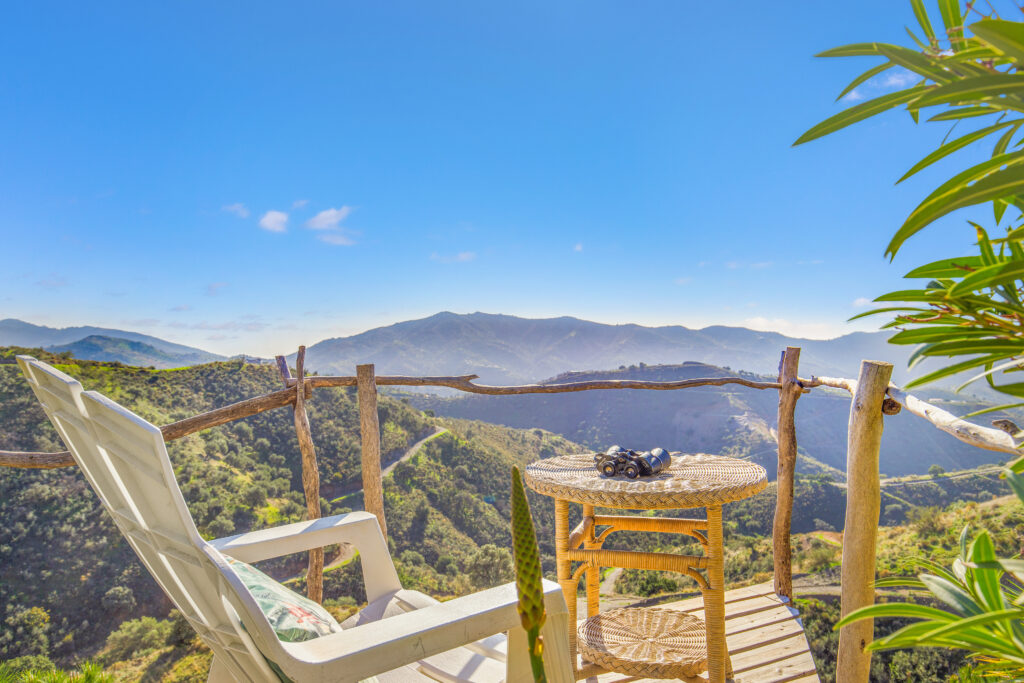
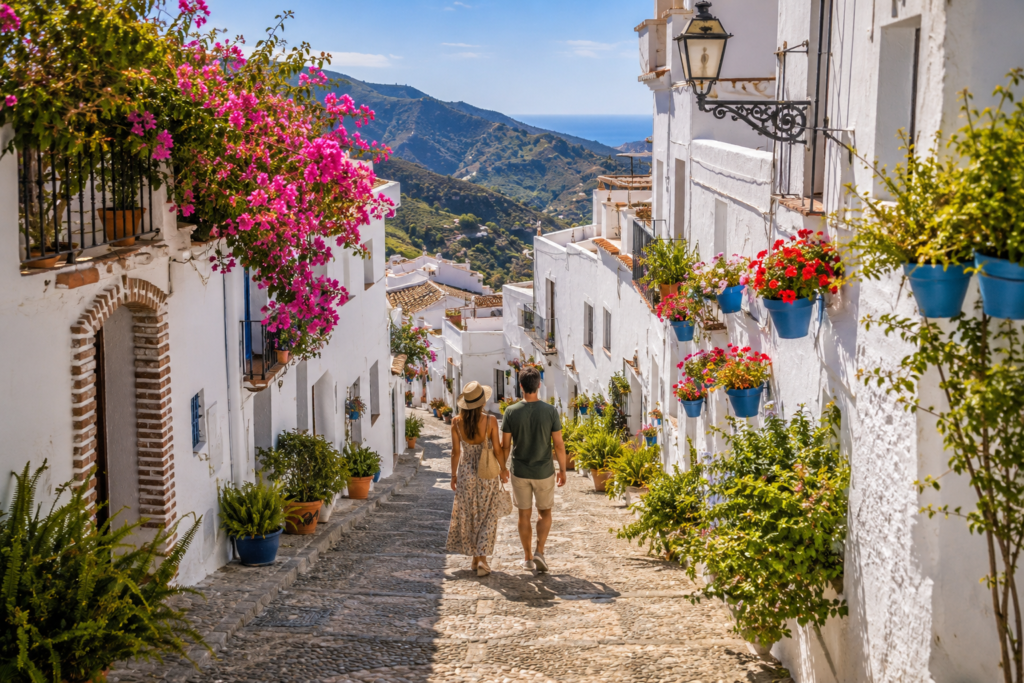
Every summer, the beautiful whitewashed village of Frigiliana comes alive with music, colour, and culture during one of Andalusia’s most distinctive celebrations, the Festival of Three Cultures.
Held during the last week of August, this annual festival transforms the village into an open-air celebration of history, where the traditions of Christian, Muslim, and Jewish cultures are honoured through music, gastronomy, art, and storytelling.
Just a short drive from Nerja and easily accessible from Axarquía and the Costa Tropical, it’s an event that attracts thousands of visitors every year and offers a truly unforgettable experience.
What Is the Festival of Three Cultures?
Frigiliana’s Festival of Three Cultures celebrates the centuries when Christians, Moors, and Jews lived together in southern Spain, shaping the region’s architecture, cuisine, and traditions.
Rather than being a religious event, the festival is a celebration of cultural heritage and peaceful coexistence. Throughout the village, visitors can enjoy concerts, historical performances, artisan markets, workshops, exhibitions, and food inspired by the Mediterranean’s rich cultural influences.
Walking through Frigiliana during the festival feels like stepping back in time, with its narrow cobbled streets decorated with lanterns, colourful banners, and handcrafted market stalls.
Why Frigiliana Is the Perfect Setting
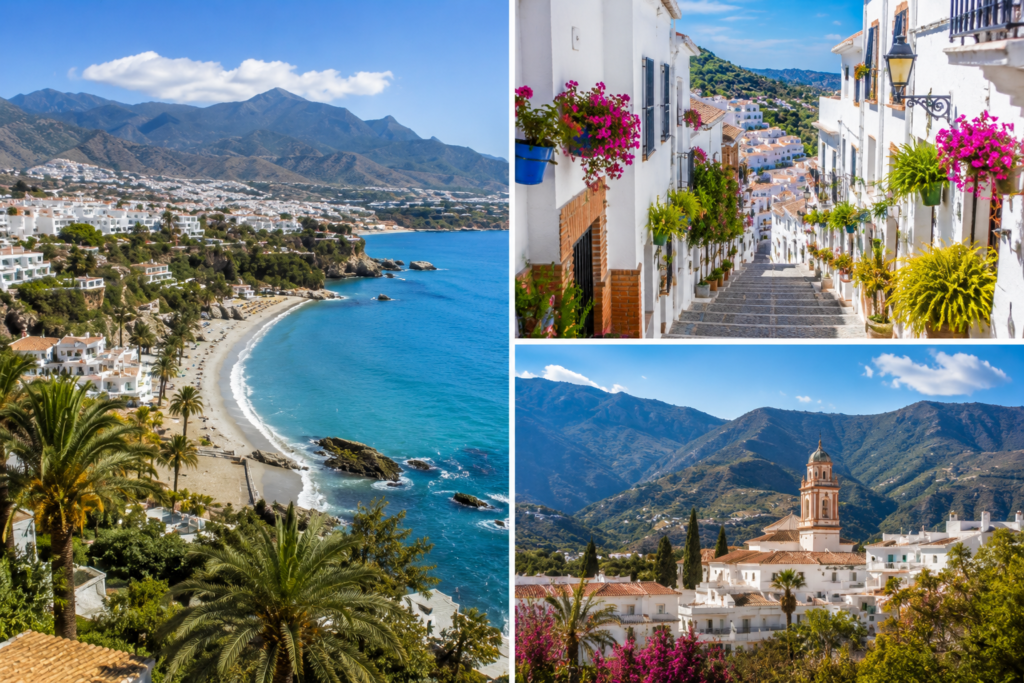
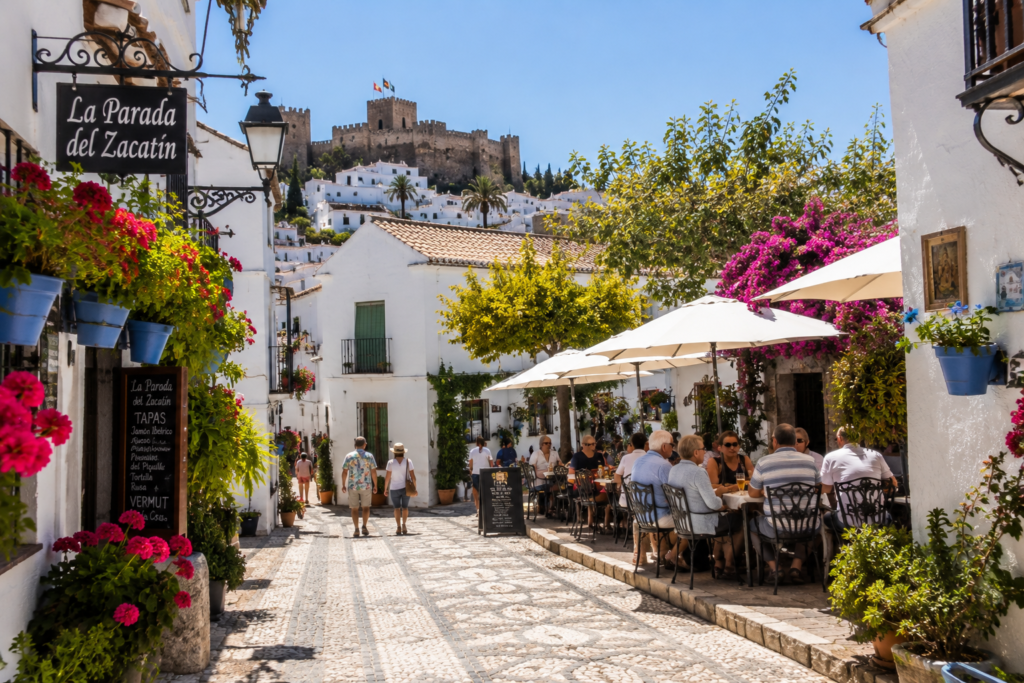
Often considered one of Spain’s most beautiful white villages, Frigiliana provides an incredible backdrop for the festival.
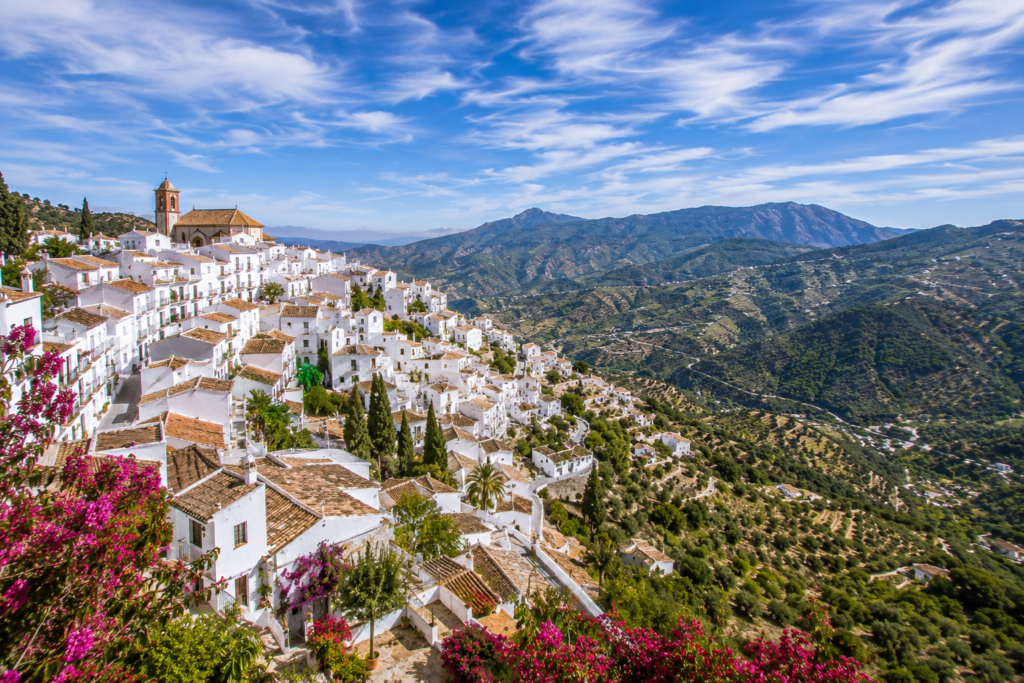
Its winding streets, whitewashed houses, flower-filled balconies, and breathtaking mountain views create an atmosphere unlike anywhere else on the Costa del Sol.
During the festival, nearly every corner of the village becomes part of the celebration, with musicians performing in small squares, artists displaying their work, and local restaurants offering special menus inspired by Andalusian history.
As the sun sets, the village takes on an even more magical atmosphere as warm lights illuminate the streets and live performances continue into the evening.
What to Expect During the Festival
Visitors can spend an entire day exploring Frigiliana while enjoying activities for all ages.
Some of the highlights include:
Live flamenco and world music performances
Traditional Andalusian dance shows
Artisan markets selling handmade crafts
Street performers and historical reenactments
Food stalls featuring Moorish, Jewish, and Spanish cuisine
Guided historical walks through the old village
Children’s workshops and family entertainment
The festival offers something for everyone, whether you’re interested in history, photography, local food, or simply soaking up the unique atmosphere.
Taste the Flavours of Three Cultures
Food plays an important role in the festival.
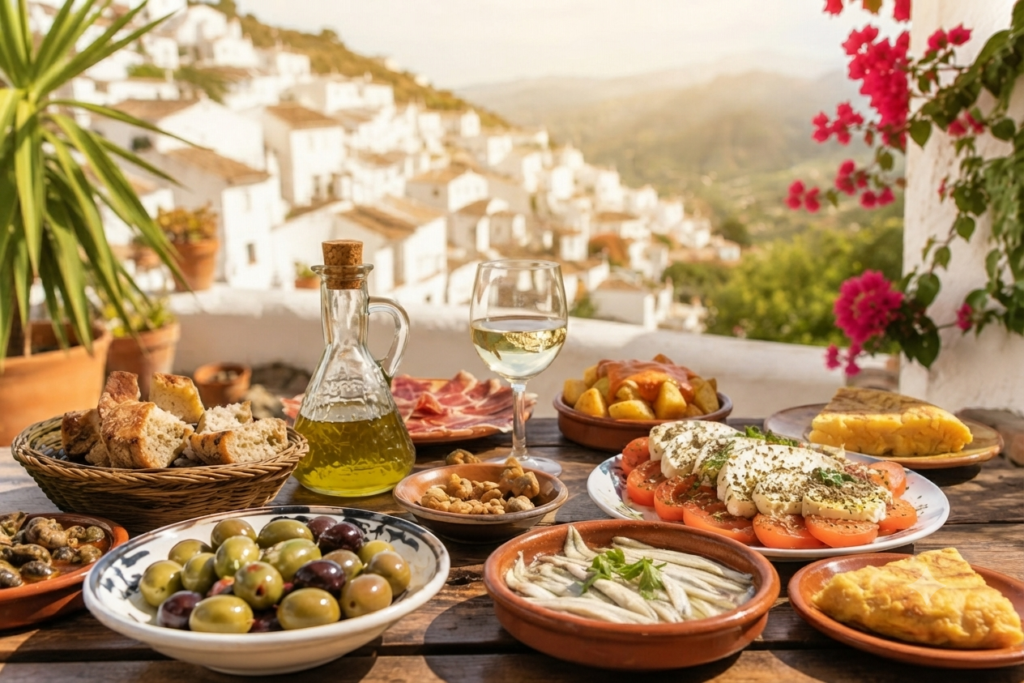
Visitors can sample dishes inspired by the different cultures that shaped Andalusia, including:
Moroccan tagines
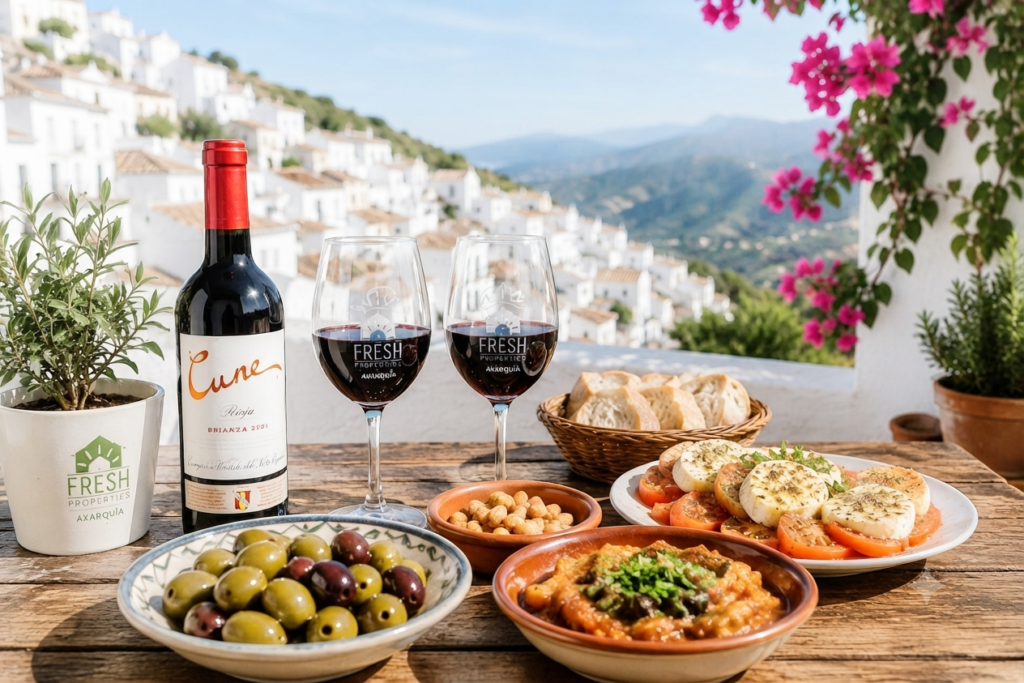
Traditional Spanish tapas
Local cheeses and cured meats
Freshly baked pastries
Honey and sugar cane products
Andalusian wines
Handmade sweets
Many restaurants also create special festival menus, making it the perfect opportunity to discover new flavours while enjoying Frigiliana’s welcoming hospitality.
A Photographer’s Dream
Frigiliana is already one of the most photographed villages in Spain, but during the Festival of Three Cultures it becomes even more spectacular.
Every street is beautifully decorated with colourful fabrics, lanterns, flowers, and artisan displays. Musicians perform against the backdrop of centuries-old whitewashed buildings, while panoramic viewpoints offer stunning views across the Axarquía countryside to the Mediterranean Sea.
Whether you’re an amateur photographer or simply capturing memories on your phone, you’ll find countless picture-perfect moments throughout the village.
Tips for Visiting
To make the most of your visit:
Arrive early, as parking fills quickly.
Wear comfortable walking shoes—Frigiliana’s streets are steep and cobbled.
Bring a camera for the spectacular scenery.
Stay into the evening to enjoy concerts and the magical atmosphere after sunset.
Book restaurants in advance if you plan to dine in the village.
Why You Shouldn’t Miss It?
The Festival of Three Cultures is much more than a local celebration—it’s one of the cultural highlights of the Axarquía region.
It combines history, music, gastronomy, and the charm of one of Andalusia’s most beautiful villages into an experience that visitors remember long after they return home.
Whether you’re holidaying on the Costa del Sol, exploring the Costa Tropical, or considering buying a property in the region, the festival offers a wonderful opportunity to experience the rich traditions and welcoming community spirit that make this part of southern Spain so special.
Frigiliana is beautiful at any time of year, but during the Festival of Three Cultures, it truly shines.
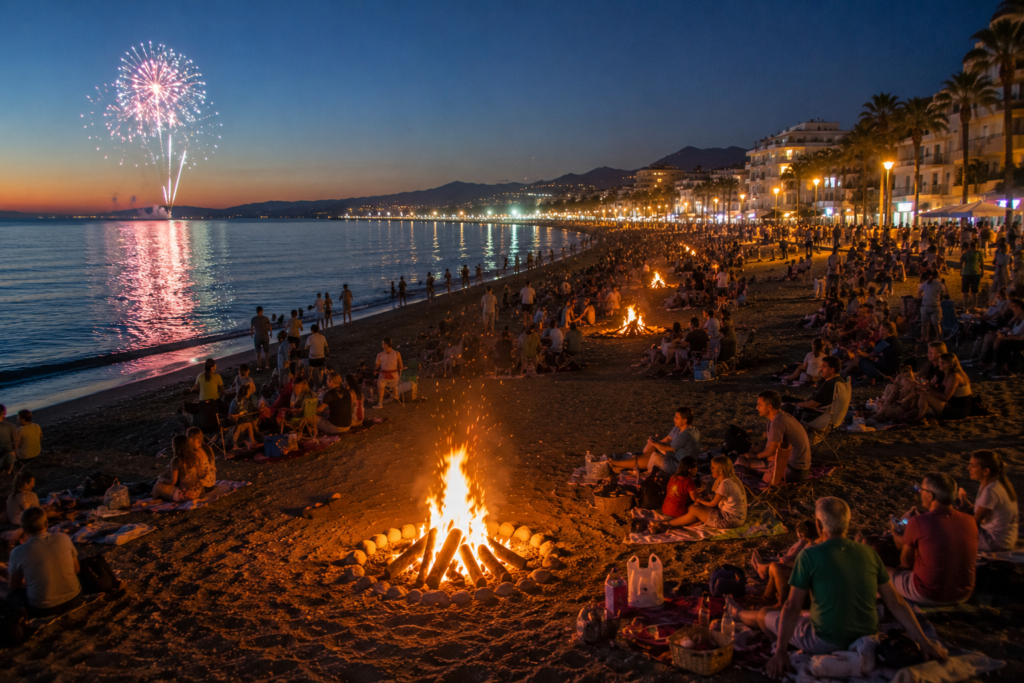
If you’re lucky enough to be in southern Spain on 23 June, you’ll witness one of the country’s most magical traditions “La Noche de San Juan, or San Juan Night.”
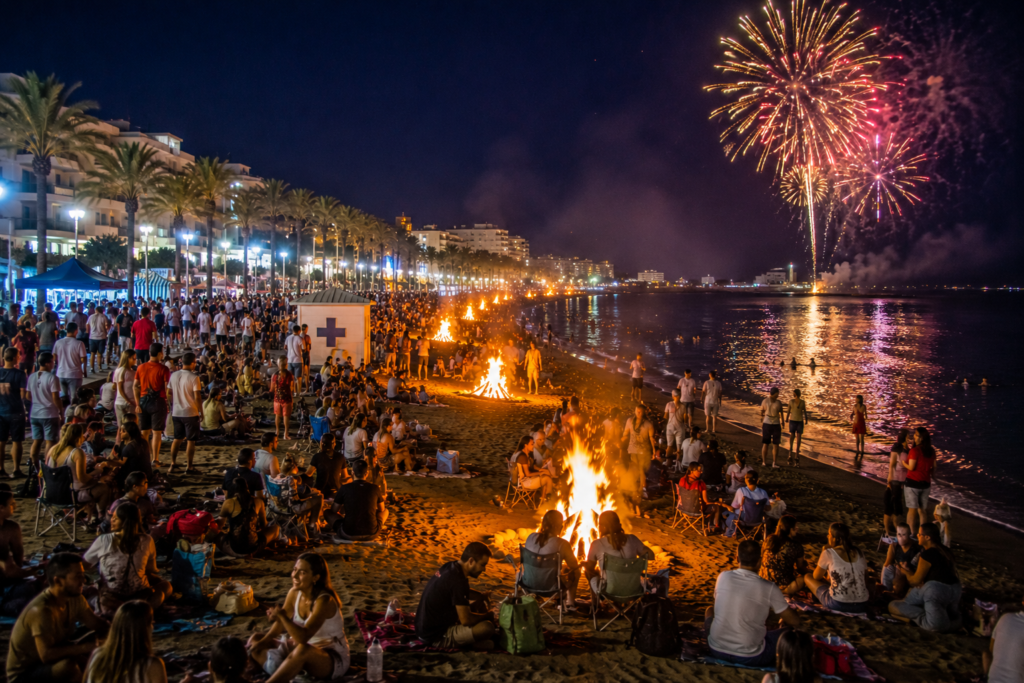
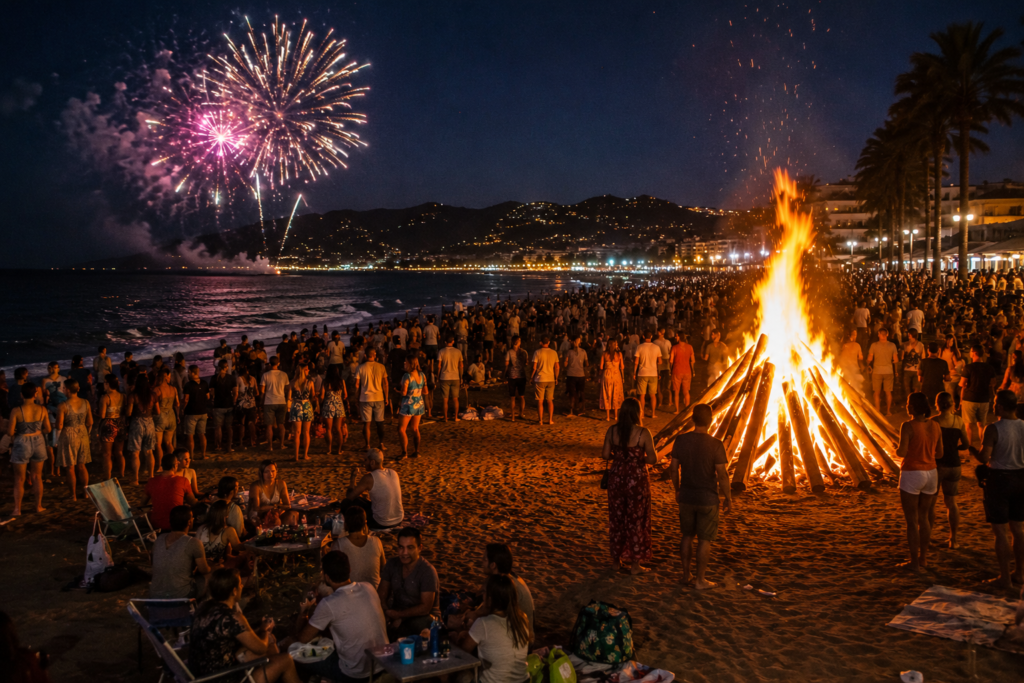
Along the beaches of Axarquía, Costa Tropical, and the eastern Costa del Sol, thousands of people gather after sunset to celebrate the arrival of summer. Bonfires light up the coastline, fireworks fill the sky, music echoes along the promenades, and families stay on the beach until the early hours of the morning.
For many visitors, San Juan is more than just a festival, it’s one of the best ways to experience authentic Andalusian culture.
What Is San Juan Night?
San Juan Night has ancient roots dating back to midsummer celebrations that marked the summer solstice. Today, the festival combines these old traditions with local customs and Christian celebrations honouring Saint John the Baptist.
Across Spain, people celebrate by gathering around bonfires, enjoying live music, sharing food with friends, and taking part in symbolic rituals believed to bring good luck for the coming year.
Best Places to Celebrate Near Axarquía
Nerja
When the sun begins to set, Nerja transforms into one of the most magical places on the Costa del Sol. Throughout the evening, locals and visitors make their way to the beaches carrying folding chairs, picnic baskets, coolers, and bundles of wood for the traditional bonfires. Families claim their spots on the sand hours before sunset, while friends gather to share food, music, and laughter as they wait for the night’s festivities to begin.
As darkness falls, the atmosphere comes alive. The glow of dozens of bonfires stretches across the shoreline, reflecting on the Mediterranean Sea, while the sound of live music mixes with the gentle waves. Beachfront restaurants and chiringuitos remain open late, serving fresh seafood, grilled sardines, tapas, and refreshing drinks. It’s not unusual to see people dancing barefoot on the sand or joining spontaneous singalongs that continue well into the night.
At midnight, one of San Juan’s most cherished traditions takes place. Many people head into the sea for a symbolic midnight swim, believing the first dip of the summer washes away bad luck and welcomes new beginnings. Others write wishes on small pieces of paper before safely placing them into the bonfire, hoping the flames will carry their dreams into the coming year.
Among the best places to experience the celebration are Burriana Beach, known for its lively atmosphere and beach bars, andEl Salón Beach, where a more intimate setting offers spectacular views of the bonfires and fireworks. If you’re looking for an unforgettable summer evening filled with local traditions, music, and Mediterranean charm, San Juan Night in Nerja is an experience you won’t want to miss.
Torre del Mar
If you’re looking for one of the liveliest San Juan celebrations in the Axarquía region, Torre del Mar is the place to be. Every year on 23 June, the town’s long beachfront promenade and wide sandy beach fill with thousands of locals and visitors ready to welcome the start of summer.
The celebrations begin in the early evening as families set up picnic blankets and groups of friends gather around the beach. Throughout the night, live bands, DJs, and cultural performances create a festive atmosphere that stretches along the coastline. Local food stalls and chiringuitos serve everything from grilled sardines and paella to refreshing cocktails and ice cream, making it easy to spend the entire evening by the sea.
As midnight approaches, excitement builds. Bonfires illuminate the beach, fireworks burst over the Mediterranean, and many people take part in the traditional midnight swim, believing it brings health, happiness, and good fortune for the year ahead. Despite attracting large crowds, the celebration remains welcoming and family-friendly, making Torre del Mar one of the best places to experience the true spirit of San Juan on the Costa del Sol.
Torrox Costa
Often recognised for having one of the best climates in Europe, Torrox Costa offers a more relaxed and intimate San Juan celebration without losing any of the magic. It’s an excellent choice for those who prefer a quieter evening while still enjoying authentic Andalusian traditions.
As the sun sets, families and friends gather along the promenade and beach, bringing picnic dinners and preparing small bonfires. The atmosphere is calm and welcoming, with the sound of live music drifting from nearby beach bars as the sea gently laps the shore.
Many of the local chiringuitos remain open late, serving freshly grilled seafood, tapas, and locally produced wines. At midnight, visitors and residents alike head into the warm Mediterranean waters for the traditional first swim of summer before watching fireworks light up the coastline.
Torrox Costa is particularly popular with couples, families, and visitors looking for a more laid-back celebration while still experiencing one of Spain’s most cherished summer traditions.
Almuñécar (Costa Tropical)
Just a short drive from Nerja, Almuñécar hosts one of the largest San Juan celebrations on the Costa Tropical. The town’s beautiful beaches become the heart of the festivities as thousands of people gather to celebrate the arrival of summer.
Throughout the evening, beach bars and restaurants are filled with locals enjoying dinner before joining the celebrations on the sand. Live music, dancing, and entertainment continue late into the night, creating an energetic atmosphere that attracts visitors from across Granada Province and beyond.
As midnight arrives, fireworks reflect across the bay while bonfires burn along the beach. Many people follow the traditional customs of making wishes, burning old notes or written worries, and taking a refreshing midnight swim in the sea. The combination of spectacular coastal scenery, warm summer temperatures, and vibrant local traditions makes Almuñécar one of the most memorable places to celebrate San Juan.
Traditional San Juan Rituals
San Juan Night is filled with customs that have been passed down through generations. While each town has its own unique traditions, many people take part in symbolic rituals believed to bring good luck, health, and fresh beginnings.
One of the most well-known traditions is jumping over a small bonfire, which is said to cleanse away negative energy and welcome prosperity for the months ahead. Others write down their hopes, dreams, or worries on a piece of paper before placing it safely into the flames, symbolising leaving the past behind and embracing new opportunities.
At midnight, beaches across the Costa del Sol and Costa Tropical come alive as hundreds of people run into the sea together. This midnight swim is believed to purify the body and spirit, making it one of the most anticipated moments of the evening.
As fireworks light up the Mediterranean sky, friends and families embrace, toast to summer, and celebrate well into the early hours, creating memories that last long after the festival has ended.
Why San Juan Is Worth Experiencing
San Juan Night perfectly captures the essence of life on Spain’s southern coast. It’s a celebration that brings together generations of local families, international residents, and holidaymakers in a shared tradition that combines history, community, and the simple joy of spending a warm summer evening by the sea.
Whether you’re enjoying grilled sardines at a beachfront chiringuito, watching fireworks reflect across the Mediterranean, or joining locals for the traditional midnight swim, San Juan offers an authentic glimpse into Andalusian culture that few other festivals can match.
For visitors exploring Axarquía, Costa Tropical, or the eastern Costa del Sol, it’s far more than just a night of celebrations it’s an opportunity to experience the welcoming lifestyle that makes this region so special. And for those considering buying a home or investing in property here, festivals like San Juan showcase the vibrant community spirit that residents enjoy year after year.
It’s easy to see why so many people return every summer. Once you’ve experienced the magic of San Juan Night, you’ll understand why it’s considered one of the most unforgettable celebrations on Spain’s Mediterranean coast.
One of the best ways to discover a region is through its food, and Axarquía is no exception.
Nestled between the Mediterranean Sea and the mountains of eastern Málaga, this corner of Andalusia offers a rich culinary tradition shaped by centuries of history, local agriculture, and a lifestyle that revolves around sharing meals with family and friends.
From freshly grilled seafood on the coast to sweet mountain wines and tropical fruits grown under the Andalusian sun, Axarquía is a destination that rewards curious food lovers. Many visitors arrive expecting beautiful landscapes and charming villages, only to leave talking about the meals they enjoyed along the way.
If you’re planning a visit, here are some of the local flavours that deserve a place on your itinerary
Espetos: The Taste of the Mediterranean
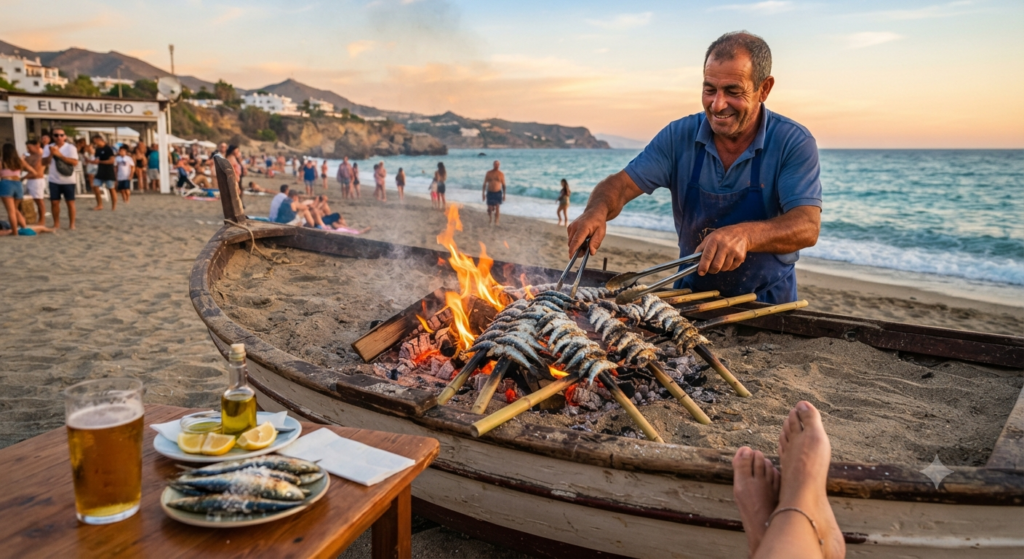
No visit to Axarquía would be complete without trying espetos de sardinas.
This traditional dish consists of fresh sardines skewered on long bamboo sticks and grilled over an open fire, often directly on the beach. The technique has been passed down through generations of fishermen and remains one of the most iconic food experiences along the Costa del Sol and Axarquía coastline.
The simplicity is what makes it so special. Fresh fish, sea salt, olive oil, and the smoky flavour from the fire create a dish that perfectly captures Mediterranean living.
Many locals will tell you that the best espetos are enjoyed barefoot in the sand, with a cold drink in hand and the sound of the waves nearby.
Did You Know?
The tradition of cooking sardines over open fires dates back to the nineteenth century, when fishermen would prepare their catch directly on the beaches after returning from sea.
Mangoes and Avocados: The Tropical Side of Andalusia
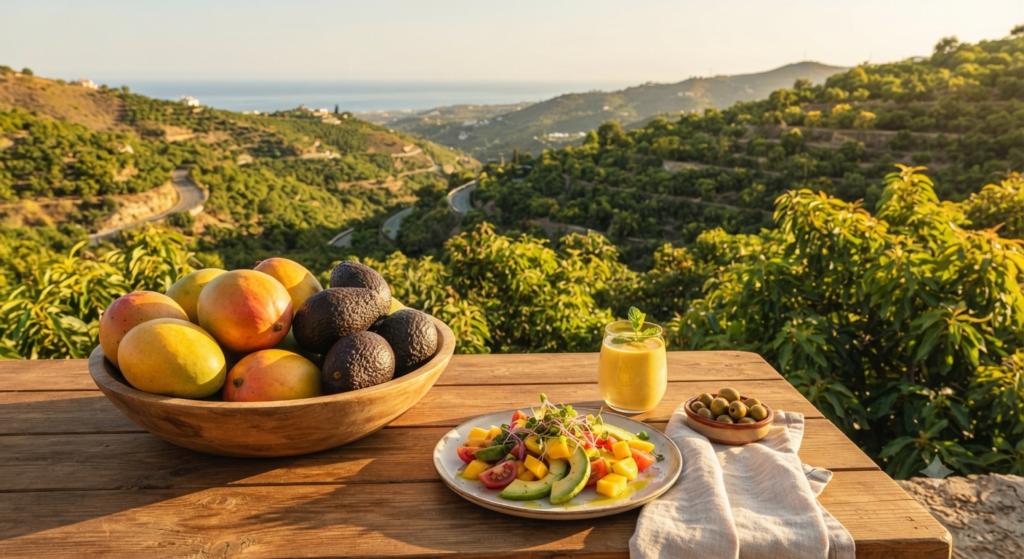
One of the things that makes Axarquía truly unique is its subtropical climate.
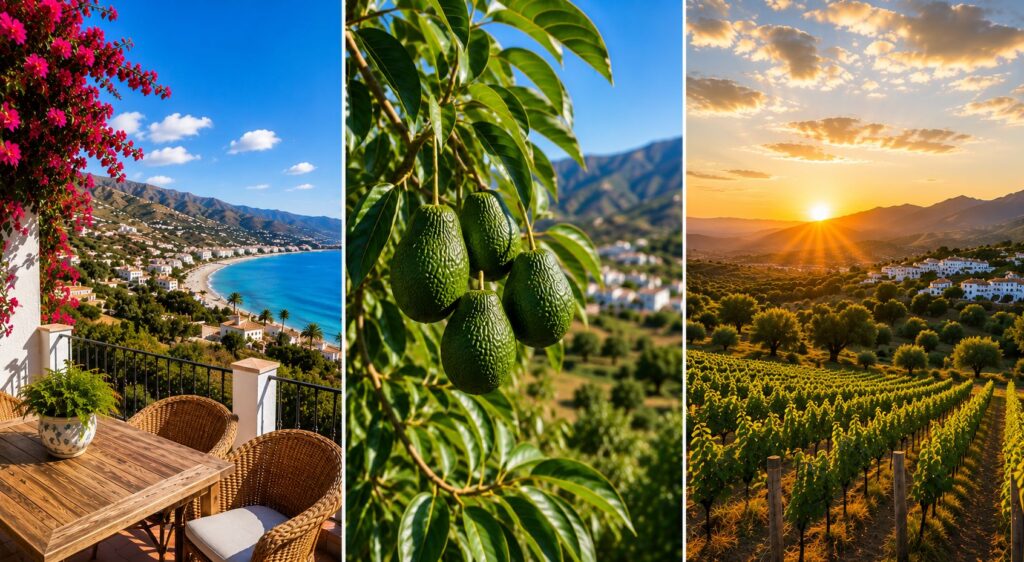
Thanks to the protection offered by the surrounding mountains, the region enjoys conditions that allow tropical fruits to thrive. Mangoes and avocados have become some of Axarquía’s most important agricultural products and are exported throughout Europe.
Driving through the countryside, visitors are often surprised to see hills covered with avocado and mango plantations rather than olive groves alone.
Local restaurants have embraced these ingredients, incorporating them into fresh salads, tapas, and innovative Mediterranean dishes that celebrate the flavours of the region.
The best time to experience the mango harvest is during late summer and early autumn, when local markets are filled with freshly picked fruit.
Sweet Moscatel Wine: A Tradition That Lives On
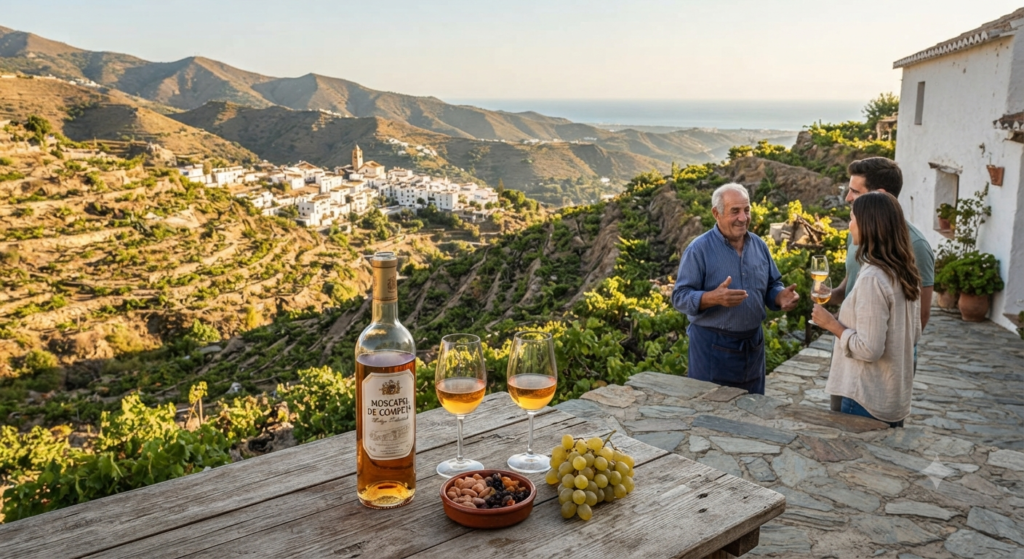
The hills around villages such as Cómpeta, Sayalonga, and Almáchar have been producing Moscatel grapes for centuries.
The sweet wines made from these grapes form an important part of Axarquía’s cultural identity and are often served during celebrations, festivals, and family gatherings.
Walking through the mountain villages, you’ll notice steep terraces covered with vineyards that have been cultivated using traditional methods passed down through generations.
Many local wineries welcome visitors for tastings, offering an opportunity to learn about the production process while enjoying spectacular mountain views.
Even for those who are not wine enthusiasts, the experience provides a fascinating glimpse into rural Andalusian life.
Traditional Tapas Culture
In Axarquía, eating is rarely rushed.
Meals are social occasions that bring people together, and tapas remain an important part of everyday life. From small family-run bars to village restaurants, sharing plates and conversation is simply part of the local culture.
Visitors quickly discover that every village has its own favourite dishes and hidden culinary gems. One evening might involve freshly caught seafood by the coast, while the next could be spent enjoying homemade stews in a mountain village square.
The joy comes not only from the food itself but from the atmosphere that surrounds it.
Many travellers say that some of their favourite holiday memories were created around simple meals shared with locals and fellow visitors.
Did You Know?
The tradition of serving tapas is believed to have originated in Andalusia, where small plates of food were placed over glasses of wine to protect them from dust and insects tapa literally means “cover” in Spanish.
Olive Oil: The Liquid Gold of Andalusia
No discussion about Andalusian cuisine would be complete without mentioning olive oil.
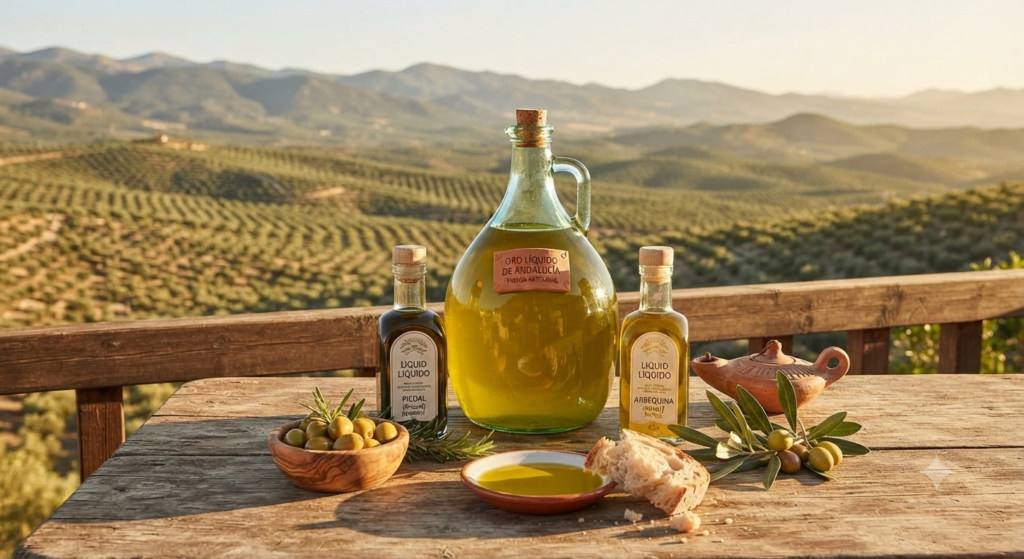
Known locally as oro líquido or “liquid gold,” olive oil forms the foundation of countless dishes across the region. Whether drizzled over fresh bread, used in traditional stews, or added to local salads, its quality is something locals take great pride in.
Many small producers still harvest olives using traditional methods, preserving techniques that have been part of Andalusian life for centuries.
Visitors exploring inland Axarquía will often pass endless olive groves that stretch across the hillsides, creating some of the region’s most beautiful landscapes.
Discover Axarquía Through Its Flavours
The food of Axarquía tells the story of the region itself.
It reflects its Mediterranean roots, mountain traditions, agricultural heritage, and the warm hospitality of its people. Every meal becomes an opportunity to discover something new, whether it’s a family recipe that has existed for generations or a local ingredient you’ve never tasted before.
For visitors staying in one of our holiday homes, exploring local markets, village restaurants, and coastal chiringuitos is one of the best ways to experience the authentic spirit of Axarquía.
Because sometimes, the memories that last the longest are created around a table shared with good food, beautiful views, and great company.
When people imagine Andalusia, they often picture whitewashed houses climbing hillsides, narrow cobbled streets, colourful flower pots, and spectacular mountain views.
In Axarquía, that image comes to life.
Scattered across the region are dozens of traditional pueblos blancos, white villages that have preserved their history, local traditions, and authentic Andalusian character. Each village tells its own story, offering visitors something unique while maintaining the slower pace of life that makes this part of Spain so special.
What makes these villages even more special is that they are still very much lived in. Grandparents gather in the plazas each evening, local bakeries open before sunrise, and many family-run restaurants have been serving the same recipes for generations. Life here follows traditions that have remained largely unchanged for decades.
Visitors often arrive planning a quick day trip and leave wishing they had stayed longer. There is something magical about wandering through narrow alleyways, discovering hidden viewpoints, and experiencing the warm hospitality that defines rural Andalusia.
For travellers looking to explore beyond the beaches, the white villages of Axarquía provide some of the most memorable experiences in the region.
Frigiliana: The Village Everyone Falls in Love With
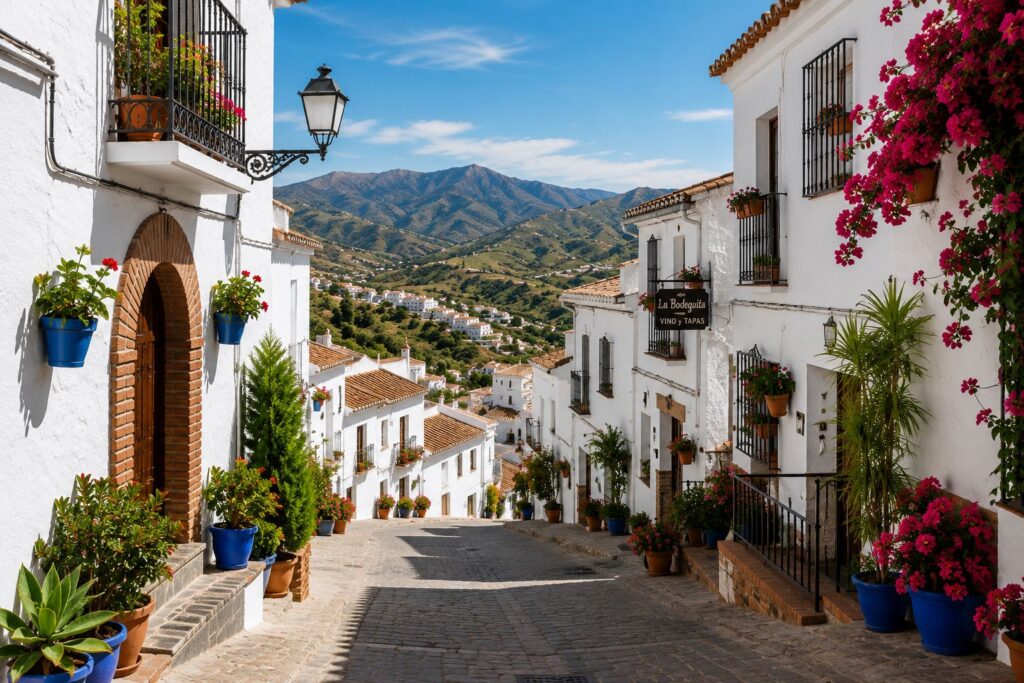
It is difficult to talk about Axarquía without mentioning Frigiliana. Frequently named one of Spain’s most beautiful villages, it captivates visitors with its immaculate whitewashed houses, colourful flower pots, and labyrinth of cobbled streets.
One of the best ways to experience Frigiliana is simply to put away the map and wander. Around every corner, you’ll find small artisan shops, hidden courtyards, and viewpoints overlooking the Mediterranean Sea. The village feels like an open-air museum, yet it remains wonderfully authentic.
Many visitors tell the same story: they planned to spend just a few hours here but ended up staying all day, enjoying long lunches and watching the sunset from one of the terraces overlooking the coast.
Did You Know? Frigiliana is famous for its annual Festival of Three Cultures, celebrating the Christian, Muslim, and Jewish communities that once lived together in the region. The entire village transforms into one huge cultural celebration with music, food, and performances.
Cómpeta: The Pearl of Axarquía
Nestled among rolling hills and vineyards, Cómpeta has long been a favourite destination for both locals and international visitors. The village combines traditional Andalusian life with a vibrant creative community, attracting artists, writers, and those looking for a slower pace of living.
Strolling through the village, you’ll notice people gathering in the central square, children playing late into the evening, and cafés filled with conversations that seem to have no sense of urgency. It is this atmosphere that many visitors remember long after returning home.
Wine has played an important role in Cómpeta’s history for centuries. The surrounding hills are dotted with vineyards that produce the region’s famous sweet Moscatel wine, a tradition that remains alive today.
Did You Know? Every August, Cómpeta hosts the famous Noche del Vino (Night of Wine), one of Andalusia’s oldest festivals, where thousands gather to celebrate local wine, music, and culture.
Sedella: Where Mountains Meet Tranquillity
Sedella may be one of Axarquía’s lesser-known villages, but that is precisely what makes it so special.
Situated near La Maroma, the highest peak in Málaga Province, Sedella offers a peaceful retreat surrounded by spectacular mountain scenery. The village itself is small and charming, with narrow streets, whitewashed homes, and panoramic views that stretch for miles.
Many visitors staying in the area describe waking up to birdsong, enjoying breakfast with mountain views, and ending the day under some of the clearest night skies they have ever seen. It is a completely different experience from the busy coastal resorts and one that encourages visitors to slow down and reconnect with nature.
Our own property, Casa Esta, captures much of this atmosphere, offering guests a chance to experience the tranquillity that makes this part of Axarquía so unique.
Did You Know? Sedella forms part of the Mudéjar Route, a collection of villages known for their unique architectural influences that blend Islamic and Christian traditions dating back hundreds of years.
Comares: The Balcony of Axarquía
Perched dramatically on a rocky outcrop, Comares is often called the “Balcony of Axarquía”—and for good reason.
The village offers some of the most breathtaking views in the entire region. On clear days, visitors can see rolling hills, olive groves, and even the Mediterranean coastline in the distance.
Comares also carries a strong Moorish heritage. Walking through its winding streets feels like stepping back in time, with decorative tiles marking historical routes and Arabic influences visible throughout the architecture.
One of the most memorable experiences is simply sitting in the village square with a coffee, watching daily life unfold at its own gentle pace.
Did You Know? Comares sits nearly 700 metres above sea level and was once considered one of the most important defensive strongholds during the Moorish period due to its strategic location.
Canillas de Aceituno: Gateway to La Maroma
At the foot of La Maroma lies Canillas de Aceituno, a village that perfectly combines outdoor adventure with traditional Andalusian charm.
The village has become increasingly popular with hikers and nature lovers, particularly since the opening of the impressive hanging bridge along the El Saltillo trail. Often compared to a smaller version of Caminito del Rey, the route offers spectacular views across the mountains and valleys of Axarquía.
Yet beyond the adventure, Canillas remains deeply rooted in local traditions. Visitors can enjoy authentic tapas bars, friendly village squares, and some of the best mountain cuisine in the region.
Many people come for a hike and leave having discovered one of their favourite villages in southern Spain.
Did You Know? The El Saltillo suspension bridge near Canillas de Aceituno stretches almost 50 metres across a dramatic gorge, making it one of the longest pedestrian hanging bridges in Spain.
When most visitors think about Axarquía, they picture beautiful beaches, whitewashed villages, and long sunny days by the Mediterranean. What many don’t realise is that one of southern Spain’s most impressive natural landmarks rises high above the coastline.
Welcome to La Maroma.
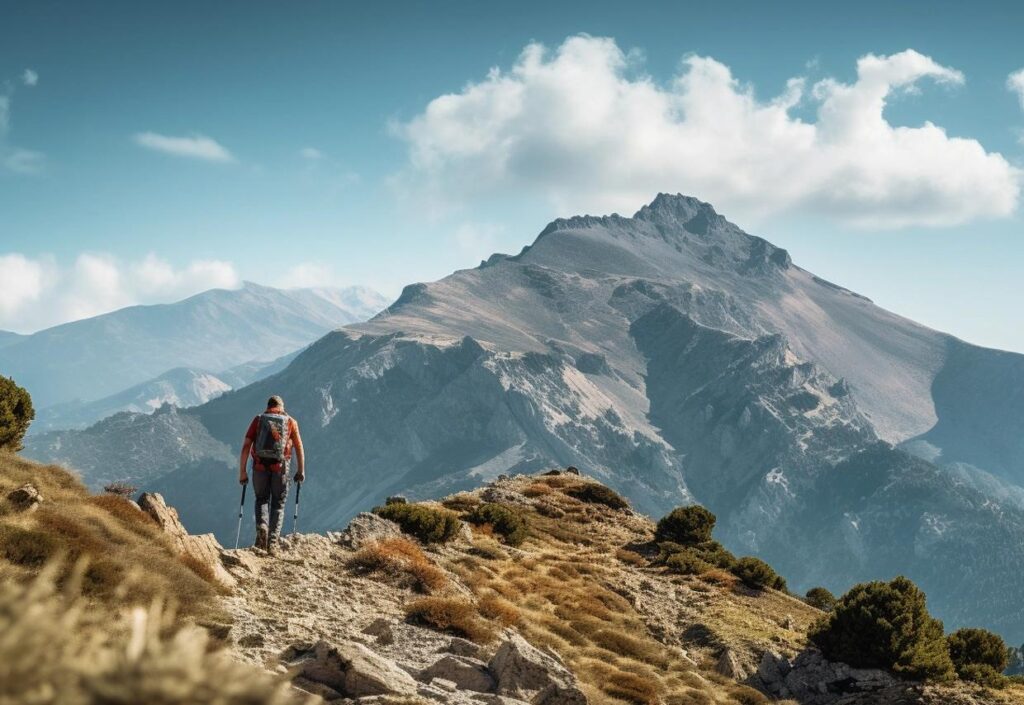
Standing at over 2,000 metres above sea level, La Maroma is the highest mountain in Málaga Province and one of the most breathtaking places to visit in Axarquía. Visible from many villages across the region, its distinctive silhouette dominates the landscape and serves as a constant reminder that Axarquía offers far more than coastal scenery.
For nature lovers, hikers, photographers, and anyone looking to experience a different side of Andalusia, La Maroma is an unforgettable destination.
A Different Side of Axarquía
One of the things that makes Axarquía unique is the contrast between sea and mountains.
In the morning, you can enjoy breakfast overlooking the Mediterranean. A short drive later, you can find yourself surrounded by pine forests, dramatic valleys, and mountain trails that feel a world away from the coast. La Maroma sits within the Sierra de Tejeda Natural Park, a protected area known for its rugged beauty, wildlife, and spectacular viewpoints. Many visitors are surprised by how quickly the landscape changes. The beaches and promenades of Nerja and Torrox seem distant as the roads begin to climb into the mountains. The journey itself becomes part of the adventure.
Ask anyone who has reached the upper slopes of La Maroma what they remember most, and the answer is usually the same:the view
On clear days, visitors can see across much of Axarquía, the Mediterranean coastline, and even towards the mountains of Granada. During sunrise and sunset, the landscape takes on a completely different character as golden light sweeps across the valleys below. Even if you’re not planning a full summit hike, there are numerous viewpoints and walking routes throughout the surrounding area that offer incredible scenery. It’s one of those places where photographs rarely do the experience justice. Part of La Maroma’s appeal lies in the charming villages that surround it. Villages such as Canillas de Aceituno, Sedella, Alcaucín, and Cómpeta act as gateways to the mountain and offer visitors an authentic taste of rural Andalusia.
Many travellers choose to spend a day exploring these villages before heading into the mountains. Narrow streets, traditional restaurants, and spectacular viewpoints create the perfect introduction to this part of Axarquía. The slower pace of life is something visitors immediately notice. It’s easy to understand why so many people fall in love with the area.
Why Holidaymakers Are Choosing the Mountains
While coastal holidays remain popular, more travellers are seeking something different. Many visitors now look for peaceful countryside retreats where they can disconnect from busy routines, enjoy nature, and experience a more authentic side of Spain.
The area surrounding La Maroma offers exactly that. Imagine waking up to mountain views, enjoying breakfast on a terrace surrounded by nature, spending the day exploring walking trails and traditional villages, and ending the evening beneath some of the clearest night skies in the region.
For many guests, these experiences become the highlight of their holiday. For visitors looking to immerse themselves in the natural beauty of Axarquía, our property in Sedella offers the perfect base. Surrounded by rolling hills and spectacular mountain scenery, Casa Esta combines comfort, privacy, and adventure in one unique location.
Guests can spend their mornings enjoying panoramic views across the countryside, explore nearby walking routes through the Sierra de Tejeda Natural Park, and discover the traditional villages that make this area so special.
This is just more Than a Mountain!
La Maroma is much more than the highest peak in Málaga Province. It represents a side of Axarquía that many visitors never expect to find, wild landscapes, authentic villages, outdoor adventure, and unforgettable views.
For those willing to explore beyond the coastline, it offers some of the most rewarding experiences in southern Spain. And once you’ve experienced it for yourself, it’s easy to understand why so many visitors return to the mountains of Axarquía year after year.
Most people first discover Axarquía while searching for a sunny holiday destination on Spain’s Costa del Sol. They come for the beaches, whitewashed villages, and Mediterranean lifestyle, but many leave with a very different thought:
“Could I own a holiday home here?”
Over the past few years, Axarquía has quietly become one of southern Spain’s most attractive regions for holiday rental owners and property investors. Its year-round climate, authentic Andalusian character, growing international tourism, and relatively affordable property prices have created exciting opportunities for those looking to invest in holiday accommodation.
Whether you’re considering buying your first holiday home, already own a property, or are looking for a trusted local management partner, here’s why Axarquía deserves your attention.
1. Tourism Isn’t Just Seasonal
Unlike many European destinations that rely almost entirely on summer visitors, Axarquía welcomes guests throughout much of the year.
Spring attracts hikers, cyclists, and nature lovers.
Summer brings families enjoying the beaches.
Autumn is ideal for food tourism, wine experiences, and village festivals.
Even winter remains surprisingly busy thanks to the mild Mediterranean climate, making the region particularly attractive for retirees, digital nomads, and long-stay visitors escaping colder northern European weather.
For holiday homeowners, this longer season creates greater rental potential compared with destinations that experience only a few busy months each year.
One of the strongest indicators of a successful holiday rental market is repeat visitors.
Many guests first discover Axarquía while visiting Nerja or Frigiliana before returning to explore more of the region.
Every trip reveals another hidden village, scenic hiking trail, secluded beach, or local restaurant. This encourages repeat bookings, longer stays, and word-of-mouth recommendations, something every holiday rental owner values.
Returning guests often become loyal visitors who book the same property year after year.
3. Authentic Spain Is Becoming More Valuable
Today’s travellers increasingly seek authentic experiences rather than crowded tourist resorts.
Axarquía offers:
White villages
Local gastronomy
Traditional festivals
Vineyards
Olive groves
Hidden beaches
Mountain adventures
Mediterranean lifestyle
This authenticity has become one of the region’s biggest selling points.
Properties that embrace the local character often receive stronger guest reviews and higher booking rates.
4. The Lifestyle Sells Itself
Many holiday homeowners originally visited Axarquía as tourists.
After experiencing morning coffee overlooking the Mediterranean, leisurely village lunches, and evenings watching spectacular sunsets, they began imagining owning a home themselves.
It’s a destination that naturally creates emotional attachment, one of the strongest drivers behind second-home purchases.
5. Professional Property Management Makes Ownership Easy
Owning a holiday home doesn’t have to mean managing guest messages at midnight, coordinating cleaners, or organising maintenance from another country.
Success in holiday rentals isn’t just about owning a beautiful property.
Understanding local regulations, guest expectations, seasonal demand, pricing strategies, and maintenance requirements makes a significant difference.
That’s where having a trusted local partner becomes invaluable.
7. Axarquía Is Still Growing
Unlike some of Spain’s more saturated holiday destinations, Axarquía continues to grow steadily while preserving its authentic character.
Improved infrastructure, increasing international awareness, and the popularity of experiential travel are attracting more visitors each year.
For investors, this creates exciting long-term opportunities.
Thinking Beyond Property Ownership?
If you’ve ever considered building your own holiday rental management business, Axarquía also offers opportunities for entrepreneurs.
As holiday rental demand continues to grow, more property owners are looking for trusted local experts to manage their homes professionally.
Fresh Propertiesis expanding through carefully selected franchise partners who share our commitment to exceptional guest experiences and outstanding property management.
Whether you’re interested in owning a holiday home, maximising your rental income, or building your own holiday rental management business, we’d love to help you explore the possibilities.
Ready to Explore What’s Next?
Looking for your next holiday? Browse our collection of holiday homes in Axarquía and find the perfect place for your Mediterranean getaway. 👉 Browse Holiday Homes in Axarquía
Already own a property? Discover how our professional Holiday Rental Management services can help you maximise bookings while we take care of the day-to-day operations. 👉 Learn About Holiday Rental Management
Thinking about investing? Our local experts can help you understand the opportunities available in Axarquía and guide you through the process. 👉 Book a Free Consultation
Have questions? Whether you’re planning a holiday or considering property ownership, we’re here to help. 👉 Contact Our Team
Many visitors arrive in Axarquía expecting beautiful beaches, sunshine, and charming whitewashed villages. While the region certainly delivers on all three, what surprises many people is how much more there is to discover beyond the well-known tourist spots.
Hidden among the mountains, valleys, and winding countryside roads are places that reveal a different side of Andalusia, one filled with authentic culture, breathtaking scenery, and unforgettable experiences. From peaceful mountain retreats and panoramic viewpoints to forgotten villages and hidden walking trails, Axarquía rewards those willing to venture beyond the usual tourist route.
Imagine waking up to sweeping mountain views, spending the morning exploring traditional villages, enjoying lunch at a family-run restaurant, and ending the day watching the sun set over the Andalusian countryside. These are the moments that many visitors remember most, and they are often found in the places that don’t appear on the front page of a travel guide.
If you’re looking to experience the quieter, more authentic side of southern Spain, here are some of Axarquía’s hidden gems worth discovering.
Frigiliana Beyond the Postcards
Frigiliana is often described as one of Spain’s most beautiful villages, and it’s easy to see why. Its whitewashed houses, flower-filled streets, and stunning mountain views have made it one of the most photographed destinations in Andalusia.
But the true charm of Frigiliana lies beyond the postcards.
Take a turn down one of its narrow cobbled streets and you’ll discover a slower, more authentic side of village life. Elderly residents chat from their balconies, colourful flower pots decorate hidden corners, and small artisan shops offer locally made crafts and traditional products.
As you wander higher through the village, breathtaking views open up across the surrounding mountains and down towards the Mediterranean Sea. The peaceful atmosphere encourages visitors to slow down, explore without a plan, and appreciate the simple beauty of everyday life in Andalusia.
Early mornings are particularly special, when the streets are quiet and the village feels almost untouched. In the evening, the warm glow of the setting sun reflects off the whitewashed buildings, creating a magical atmosphere that keeps visitors coming back year after year.
Frigiliana isn’t simply a place to visit, it’s a place to experience. And for many travelers exploringAxarquía, it becomes one of the most memorable stops of their journey.
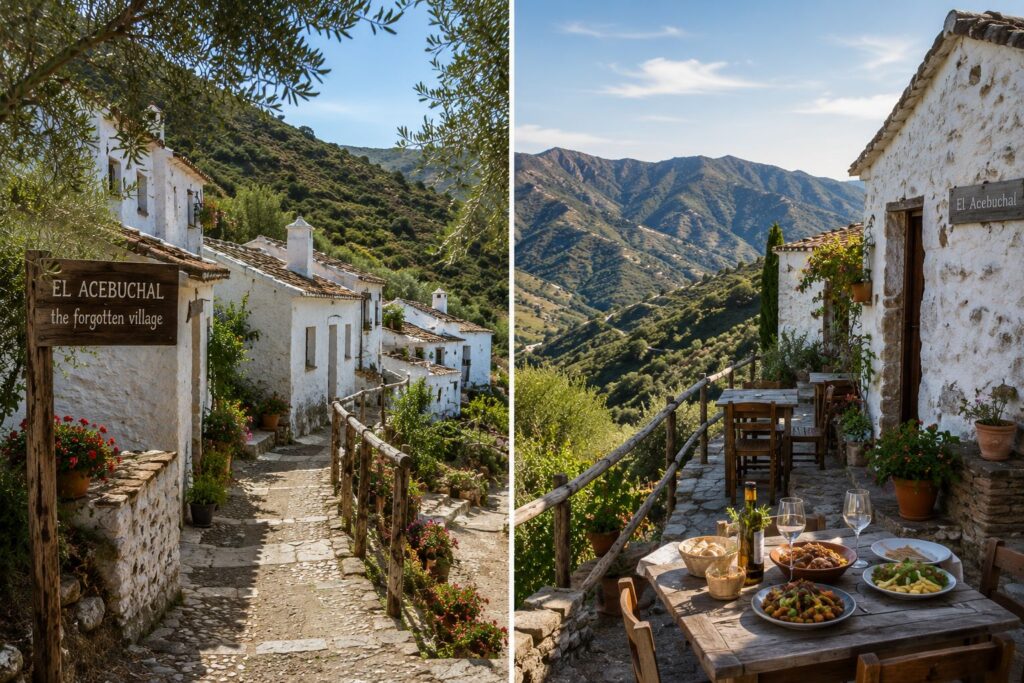
El Acebuchal: The Forgotten Village
Tucked away in the hills between Frigiliana and Cómpeta lies El Acebuchal, often referred to as “The Lost Village.” If you didn’t know it was there, you could easily drive through Axarquía without ever discovering it.
The village has a fascinating history. During the Spanish Civil War, its residents were forced to leave, and for decades the village stood abandoned. It wasn’t until the late 1990s that descendants of the original families began restoring the buildings and bringing life back to this hidden corner of Andalusia.
Today, visiting El Acebuchal feels like stepping back in time. The stone cottages, narrow pathways, and peaceful surroundings create an atmosphere that is difficult to find elsewhere. There are no crowds, no large hotels, and very little noise beyond birdsong and the occasional passing walker.
Many visitors arrive intending to stay for an hour and end up spending an entire afternoon enjoying a traditional meal, exploring the surrounding trails, and soaking up the tranquillity. It’s one of those places that reminds you to slow down and appreciate the simple pleasures of travel.
For those looking to experience a quieter side of Axarquía, El Acebuchal is a hidden gem that often becomes a favourite memory of the region.
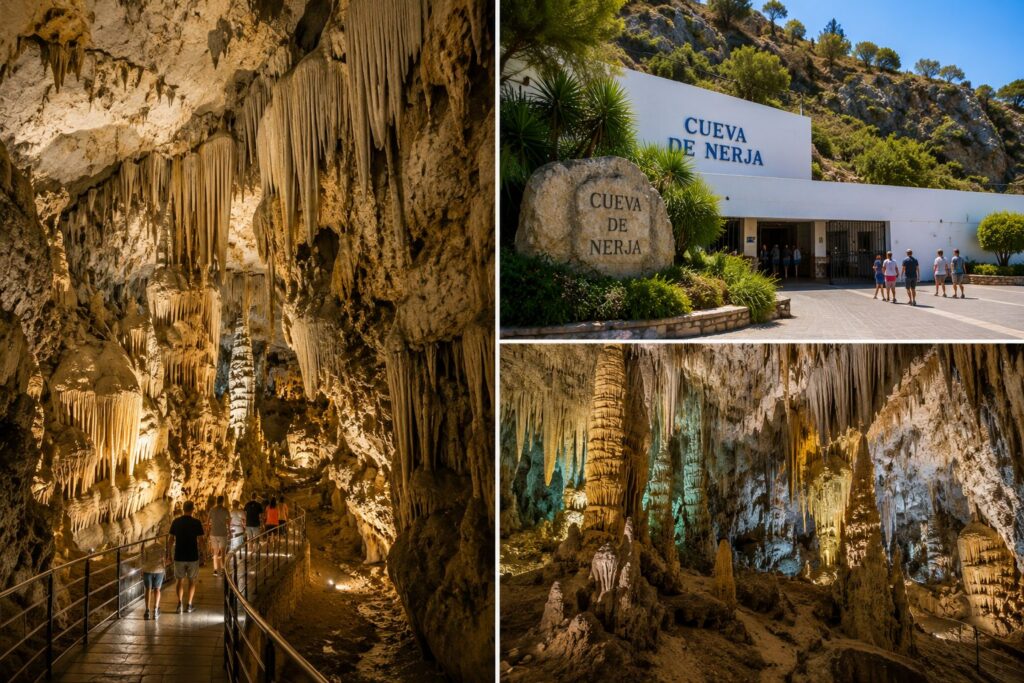
The Caves of Nerja
While Nerja’s beaches and coastal views attract thousands of visitors each year, many people don’t realise that one of Andalusia’s most extraordinary natural attractions lies just a few kilometres inland.
The Nerja Caves were discovered by local boys in 1959 and quickly became recognised as one of Spain’s most important archaeological and geological sites. Inside, visitors are greeted by enormous chambers, towering stalactites, and fascinating rock formations that have developed over thousands of years.
While Nerja’s beaches and coastal views attract thousands of visitors each year, many people don’t realise that one of Andalusia’s most extraordinary natural attractions lies just a few kilometres inland
The Nerja Caves were discovered by local boys in 1959 and quickly became recognised as one of Spain’s most important archaeological and geological sites. Inside, visitors are greeted by enormous chambers, towering stalactites, and fascinating rock formations that have developed over thousands of years.
What makes the caves particularly remarkable is their connection to prehistoric history. Archaeologists have discovered cave paintings and evidence of human activity dating back thousands of years, offering a glimpse into the lives of some of Europe’s earliest inhabitants.
Walking through the caves is an unforgettable experience. The scale of the chambers is difficult to appreciate until you’re standing beneath them, and the contrast between the bright Mediterranean coastline above and the cool underground world below makes the visit even more memorable.
Whether you’re travelling as a family, a couple, or simply looking for something different to do during your stay, the Nerja Caves offer a fascinating journey beneath the surface of Axarquía.
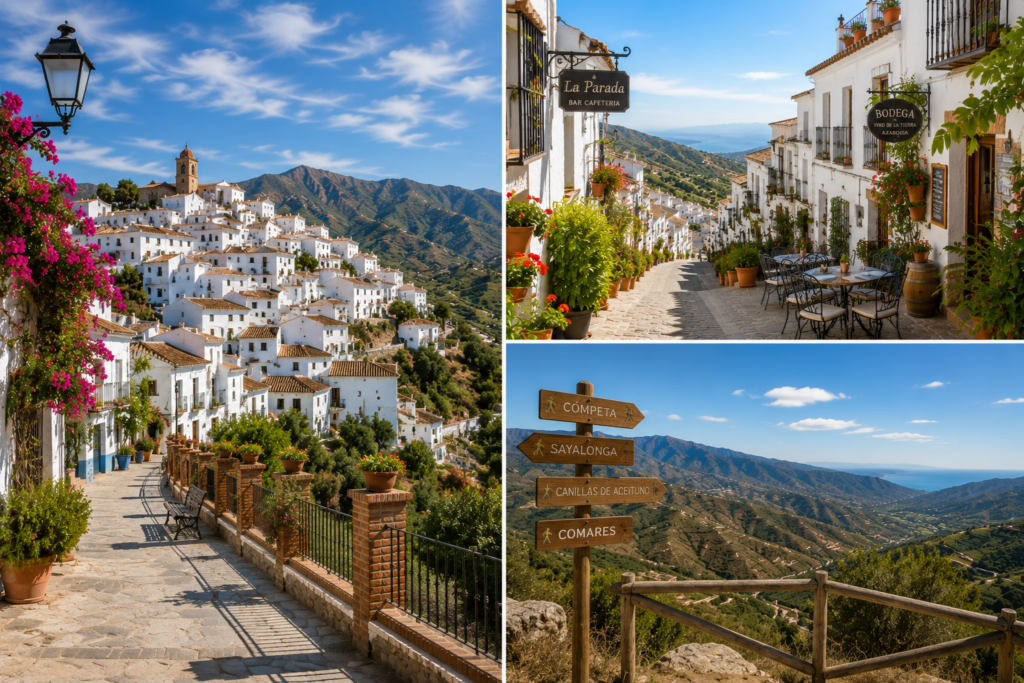
The Mountain Villages of Axarquía
Some of the most authentic experiences in Axarquía are found away from the coast.
Scattered throughout the hills and valleys are traditional villages where daily life still revolves around local cafés, village squares, and long-standing traditions. Places such as Cómpeta, Sayalonga, Canillas de Aceituno, and Comares each have their own character, yet they all share a sense of authenticity that visitors immediately notice.
One of the joys of exploring these villages is that there is no rush. You can spend the morning wandering through whitewashed streets, stop for a leisurely lunch overlooking the mountains, and spend the afternoon discovering local viewpoints and hidden corners.
The scenery is often spectacular. From many villages, visitors can enjoy panoramic views stretching across olive groves, vineyards, mountain ranges, and even the Mediterranean Sea on clear days.
These villages also offer a wonderful opportunity to connect with local culture. Seasonal festivals, artisan shops, traditional bakeries, and family-run restaurants provide experiences that feel genuinely Andalusian rather than designed specifically for tourists.
For travellers seeking a deeper connection with the region, the mountain villages often become the highlight of their visit.
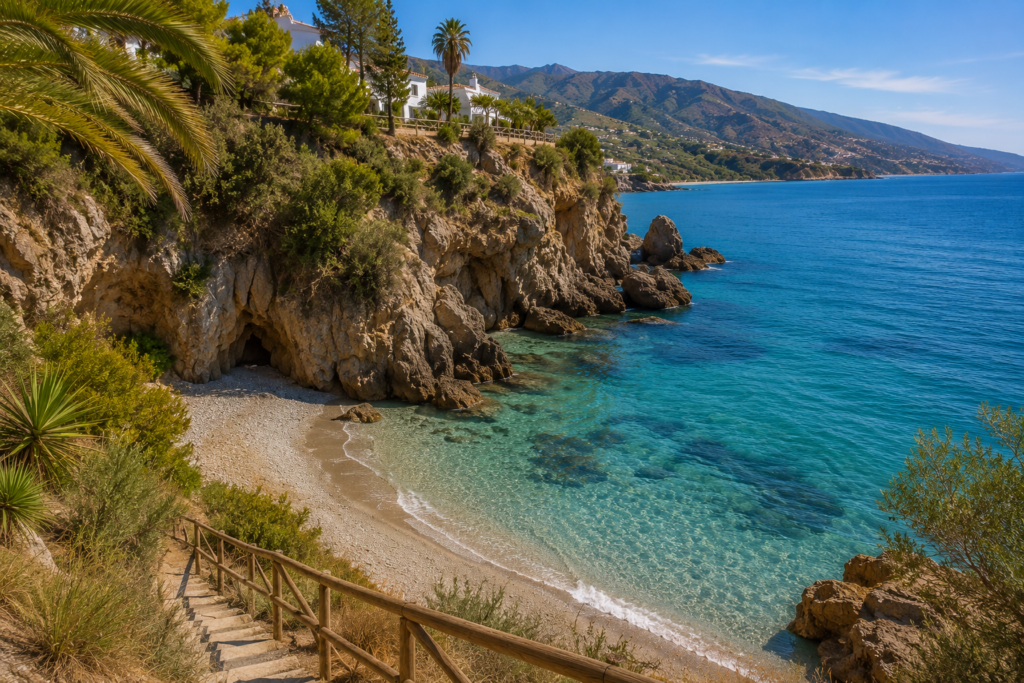
Hidden Beaches and Quiet Coves
While the larger beaches of Nerja and Torrox are popular for good reason, some of Axarquía’s most beautiful coastal spots are the ones that require a little extra effort to find.
Along the coastline, small coves and secluded beaches are tucked between cliffs and rocky headlands. Some can only be reached by footpaths, while others are known mainly through local recommendations.
The reward for exploring beyond the main tourist areas is often a more peaceful experience. Crystal-clear water, dramatic coastal scenery, and a sense of escape make these locations perfect for visitors looking to unwind.
Many returning guests say their favorite beach isn’t the busiest or most famous one, it is the small cove they discovered unexpectedly during a coastal walk or a recommendation from a local resident.
These quieter stretches of coastline capture the essence of Axarquía. They offer space to relax, connect with nature, and enjoy the Mediterranean at a slower pace.
Why These Places Matter
The hidden gems of Axarquía reveal what makes the region truly unforgettable. While its beaches, sunshine, and picturesque villages may attract first-time visitors, it’s the lesser-known places and authentic experiences that leave a lasting impression.
Unlike destinations built around large tourist attractions, Axarquía rewards those who take the time to explore beyond the guidebooks. Some of the region’s most memorable moments aren’t found on a busy promenade they’re discovered while driving along a quiet mountain road, wandering through a peaceful village square, or following a winding path that leads to a secluded beach overlooking the Mediterranean.
It’s the forgotten village of El Acebuchal, where history has been lovingly brought back to life. It’s standing in awe beneath the towering rock formations of the Nerja Caves, imagining the people who once sheltered there thousands of years ago. It’s enjoying a leisurely lunch at a family-run restaurant in Cómpeta, watching local life unfold around you, or finding a hidden cove where the only sounds are gentle waves and seabirds overhead.
These experiences can’t be rushed or planned to the minute. They encourage you to slow down, embrace the relaxed Andalusian lifestyle, and connect with the region in a way that feels genuine and personal. Long after the holiday ends, it’s often these unexpected discoveries that become the stories you’ll remember most.
Perhaps that’s why so many visitors return to Axarquía year after year. They may arrive for the sunshine, spectacular scenery, and Mediterranean coastline, but they come back for the warmth of its people, the charm of its villages, and the hidden places that continue to surprise them with every visit.
Discover Axarquía for Yourself
Whether you’re planning your first visit or returning to uncover even more of the region’s hidden treasures, Fresh Properties can help you experience the very best of Axarquía.
When visitors think of southern Spain, famous destinations such as Marbella, Málaga, and the Costa del Sol often dominate the conversation. Yet just east of Málaga lies a region that offers a very different experience, one defined by authentic villages, beautiful coastlines, dramatic mountain scenery, and a slower pace of life.
Welcome to Axarquía
Stretching from the Mediterranean coastline to the rolling hills and mountains of eastern Málaga province, Axarquía is one of Andalusia’s most diverse and captivating regions. Home to picturesque coastal towns such as Nerja and Torrox, as well as charming whitewashed villages including Frigiliana and Cómpeta, the area offers a unique blend of seaside living, mountain scenery, and authentic Spanish culture.
Named after the Arabic word Ash-Sharquiyya, meaning “the eastern region,” Axarquía reflects centuries of history, tradition, and cultural influence. Visitors can explore historic villages, enjoy local gastronomy, discover scenic hiking trails, and relax on beautiful Mediterranean beaches, all within a relatively short distance of one another.
What makes Axarquía particularly special is its ability to offer everything people love about Andalusia: sunshine, stunning landscapes, rich culture, and a relaxed lifestyle, while remaining less crowded and more authentic than many of Spain’s more established tourist destinations.
Whether you’re planning a holiday, searching for the perfect holiday home destination, or simply looking to experience a more genuine side of southern Spain, Axarquía is a region that continues to surprise, inspire, and welcome visitors year after year.
A Climate Designed for Outdoor Living
Like much of southern Spain, Axarquía enjoys one of Europe’s most pleasant year-round climates, making it an ideal destination for visitors who love spending time outdoors.
With sunshine for much of the year and mild winters, outdoor living isn’t just a holiday activity, it’s a way of life. Mornings often begin with coffee on a sunny terrace, afternoons are spent wandering through whitewashed villages or hiking scenic mountain trails, and evenings end with long dinners overlooking the Mediterranean as the sun sets. Even during the cooler months, it’s common to see locals and visitors dining al fresco, exploring weekly markets, or relaxing along the coast.
Unlike destinations that only come alive during the summer, Axarquía offers something to enjoy in every season. Spring transforms the countryside with colorful wildflowers and almond blossoms, while autumn brings warm temperatures that are perfect for hiking, cycling, and vineyard visits. This extended outdoor season is one of the reasons many travelers return year after year.
The region’s unique subtropical microclimate also makes Axarquía one of the few places in continental Europe where tropical fruits thrive. Hillsides are covered with olive groves, vineyards, almond trees, and flourishing plantations of avocados and mangoes. These locally grown ingredients are celebrated in traditional Andalusian cuisine and can be found in farmers’ markets, family-run restaurants, and seasonal food festivals throughout the region.
Whether you’re looking for an active holiday, a peaceful escape surrounded by nature, or simply somewhere to enjoy the Mediterranean sunshine, Axarquía offers the perfect setting throughout the year.
Authentic Andalusian Character
One of Axarquía’s greatest attractions is its authentic Andalusian character. While many coastal destinations have become increasingly commercialised, this region has carefully preserved the traditions, architecture, and welcoming atmosphere that have defined it for generations.
As you wander through its charming whitewashed villages, you’ll discover narrow cobbled streets lined with colourful flower pots, hidden plazas where locals gather over coffee, and beautifully preserved churches that have watched over the communities for centuries. Every village has its own unique personality, inviting visitors to slow down and experience everyday life at a more relaxed pace.
Axarquía’s strong sense of community is reflected in its vibrant local festivals, lively weekly markets, and family-run restaurants where recipes have been passed down through generations. Whether you’re enjoying freshly grilled seafood by the coast, tasting locally produced olive oil, or sharing tapas in a traditional village square, every meal offers a glimpse into the region’s rich culinary heritage.
Beyond the scenery, it’s the genuine hospitality that leaves a lasting impression. Visitors are often greeted with warm smiles, friendly conversations, and a slower rhythm of life that makes it easy to feel at home. It’s this authenticity that encourages many travellers to return time and time again, discovering new villages and hidden corners with each visit.
For anyone seeking a more genuine Spanish experience, Axarquía offers something increasingly rare along the Mediterranean coast—a destination where tradition, culture, and everyday life remain beautifully connected.
Coastline, Countryside, and Mountains
One of the reasons visitors return to Axarquía year after year is the incredible variety of experiences waiting to be discovered. Unlike many destinations where holidays revolve around either the beach or the countryside, Axarquía offers the best of both worlds, all within a short drive.
Imagine starting your morning with breakfast overlooking the Mediterranean, spending the afternoon exploring a picturesque mountain village, and ending the day watching the sunset from a panoramic viewpoint with a glass of local wine in hand. Every day offers the opportunity to experience something completely different.
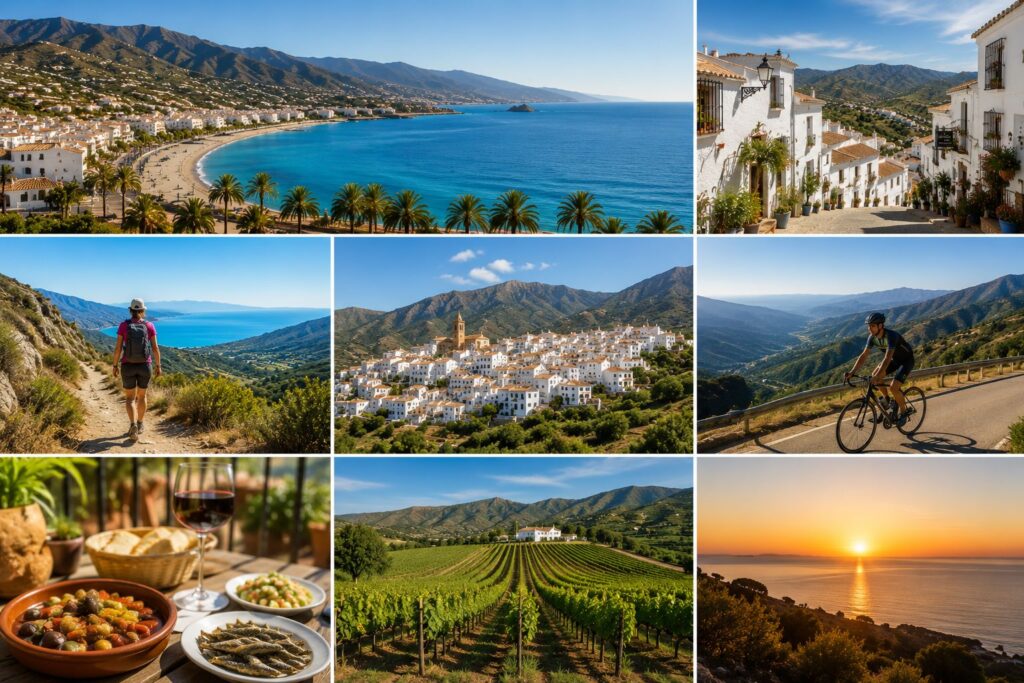
The region’s diverse landscape stretches from golden beaches and dramatic cliffs to fertile valleys, vineyards, olive groves, and the foothills of the Sierra de Tejeda, Almijara and Alhama Natural Park. Whether you’re seeking relaxation or adventure, Axarquía provides countless opportunities to explore at your own pace.
Visitors can enjoy:
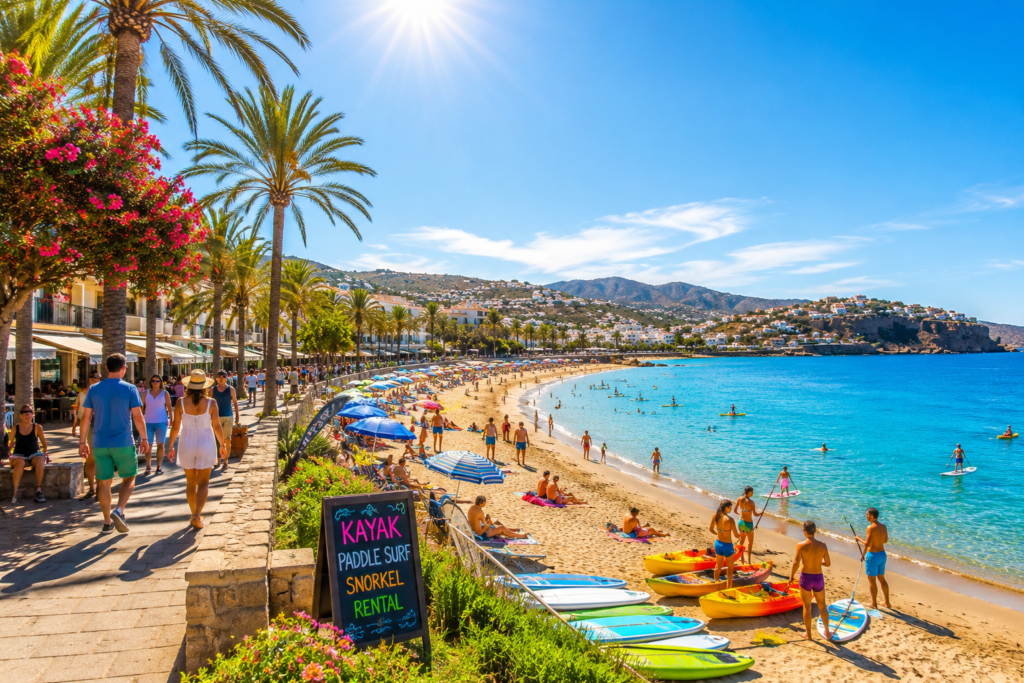
Beautiful beaches perfect for swimming and sunbathing
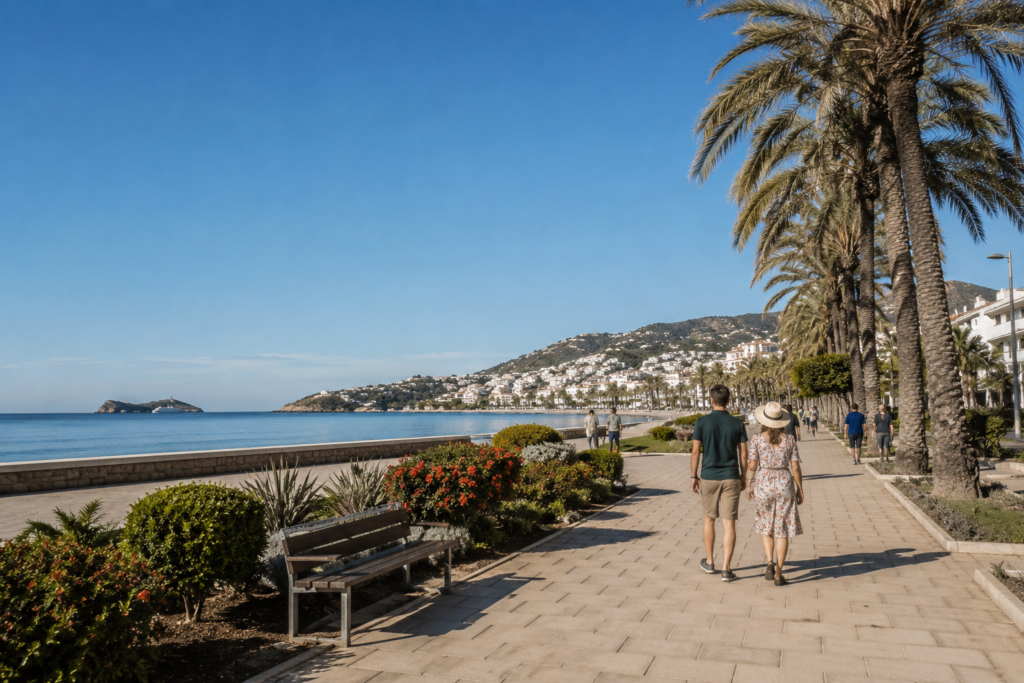
Scenic coastal promenades with cafés and sea views
Hiking trails through natural parks and mountain landscapes
Cycling routes for both casual riders and experienced cyclists
Panoramic viewpoints overlooking the Mediterranean and surrounding valleys
Traditional whitewashed villages rich in history and culture
Local wineries, olive oil tastings, and authentic Andalusian cuisine
Kayaking, paddleboarding, and other water sports along the coastline
Weekly artisan markets featuring locally made products and fresh produce
Hidden picnic spots and quiet countryside roads perfect for leisurely drives
Nature lovers will appreciate the changing scenery throughout the seasons. Spring paints the hillsides with colorful wildflowers and almond blossoms, while autumn offers comfortable temperatures for hiking and exploring the vineyards during harvest season. Even winter remains pleasantly mild, making outdoor adventures possible almost every day of the year.
It’s this remarkable combination of coastline, countryside, mountains, and authentic village life that makes Axarquía so special. Few destinations in southern Spain allow you to experience so much variety in such a compact region, making every visit feel like a new adventure.
Why Visitors Keep Coming Back
Many people discover Axarquía almost by accident. Some arrive for a relaxing beach holiday in Nerja, spend an afternoon wandering the flower-filled streets of Frigiliana, or choose Torrox for its famous year-round sunshine. What begins as a short visit often becomes the start of a lasting connection with the region.
What surprises many visitors is how quickly Axarquía feels familiar. Instead of crowded resorts and busy tourist attractions, they discover welcoming villages where local life continues at its own gentle pace. Friendly conversations in family-run cafés, colorful weekly markets, scenic mountain roads, and peaceful evenings overlooking the Mediterranean create memories that stay with them long after they’ve returned home.
Every season offers a new reason to come back. Spring fills the countryside with almond blossoms and wildflowers, summer brings long beach days and lively festivals, autumn is perfect for hiking and local food experiences, while winter offers mild temperatures that allow visitors to enjoy the outdoors when much of Europe is experiencing colder weather.
Discover Axarquía for Yourself
Whether you’re planning your next holiday, visiting the region for the first time, or searching for a destination that combines sunshine, spectacular scenery, and authentic Andalusian culture, Axarquía offers an unforgettable experience throughout the year.
At Fresh Properties, we’re passionate about helping guests discover the very best the region has to offer. From carefully selected holiday homes and local recommendations to exceptional guest support, we make it easy for you to enjoy a relaxing and memorable stay.
If you’ve fallen in love with Axarquía and are thinking beyond your next holiday, our team can also help you explore opportunities to own or invest in property in the region. With local knowledge and trusted partners, we’re here to support you every step of the way.
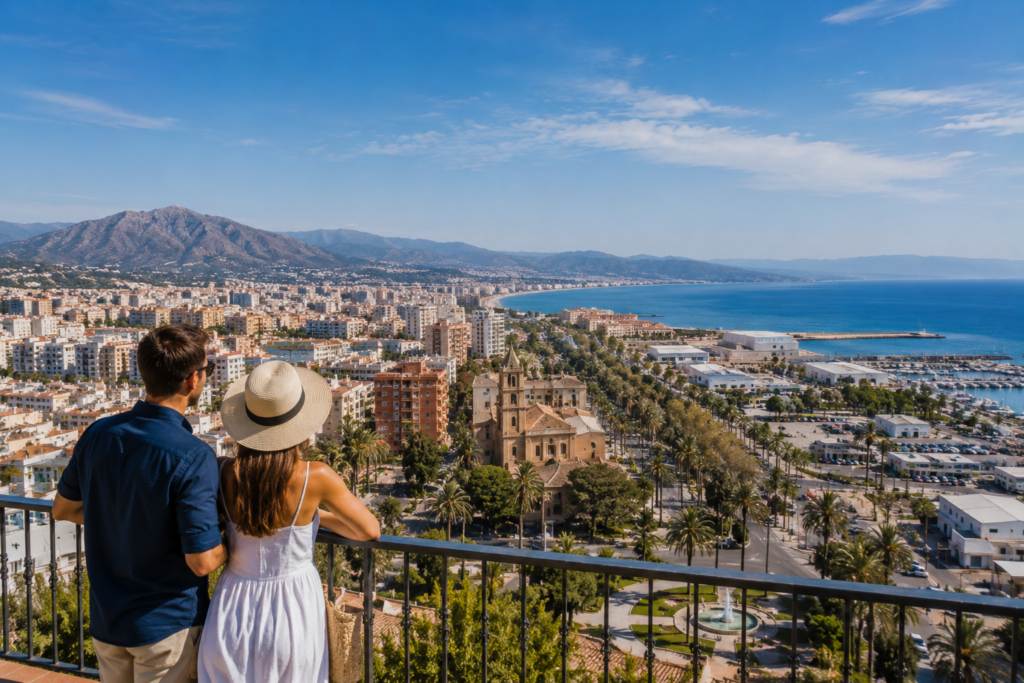
When people first discover Costa Tropical, they’re often drawn by its sunshine, beaches, and beautiful Mediterranean coastline. Yet what keeps many visitors returning year after year is something more difficult to describe.
Unlike some of Spain’s busier coastal destinations, Costa Tropical offers a more authentic experience. Here, visitors can enjoy stunning scenery, traditional Andalusian culture, outdoor living, and a relaxed pace of life without the crowds often found elsewhere.
Whether you’re planning a holiday, considering a holiday home, or exploring opportunities in the region, here’s why Costa Tropical continues to attract visitors from across Europe and beyond.
A Year-Round Destination
One of Costa Tropical’s biggest attractions is its unique subtropical climate.
With more than 300 days of sunshine each year and mild temperatures throughout the seasons, visitors can enjoy outdoor activities for much of the year. While summer remains popular, spring and autumn have become increasingly attractive for travellers looking to enjoy pleasant weather, fewer crowds, and a more relaxed atmosphere.
For holiday homeowners, this extended season creates opportunities to welcome guests beyond the traditional summer months.
Beautiful Beaches and Outdoor Adventures
Costa Tropical offers far more than simply relaxing by the sea.
Visitors can spend their days exploring hidden coves, walking along coastal promenades, diving in crystal-clear waters, or discovering hiking trails that connect the coastline with the nearby mountains.
The region’s unique location means it’s possible to enjoy both Mediterranean beaches and the Sierra Nevada mountains within the same day.
Authentic Andalusian Charm
One of the reasons guests return to Costa Tropical is its authenticity.
Whitewashed villages, local markets, family-run restaurants, and traditional festivals remain part of everyday life. Visitors can experience a side of Spain that feels genuine and welcoming while still enjoying modern comforts and accommodation.
Towns such as Almuñécar, Salobreña, La Herradura, and Motril each offer their own character and experiences, encouraging visitors to return and explore more of the region.
A Favorite Among Holiday Homeowners
Costa Tropical has become increasingly popular among holiday homeowners looking to enjoy their property while also welcoming guests throughout the year.
The region’s growing popularity, combined with its broad appeal to families, couples, remote workers, and long-stay visitors, has helped create strong demand for quality holiday accommodation.
Many owners are discovering that their property can become both a personal retreat and a valuable holiday rental when professionally managed.
Why Costa Tropical Continues to Grow
As travellers seek destinations that offer authenticity, natural beauty, and a more relaxed Mediterranean lifestyle, Costa Tropical continues to stand out.
It remains one of southern Spain’s hidden gems—offering visitors memorable experiences while providing holiday homeowners with exciting opportunities to make the most of their property.
Planning Your Next Costa Tropical Stay?
Whether you’re searching for the perfect holiday accommodation or looking for professional support managing your holiday home, Fresh Properties is here to help.
With local expertise, exceptional guest experiences, and full-service holiday rental management, we help guests and homeowners make the most of everything Costa Tropical has to offer.
A realistic look at demand, seasonality, pricing, and earning potential.
If you own property on the Costa Tropical or you are thinking about buying here, you are probably asking the same question everyone asks:
Does short term rental actually work here or is it just summer hype?
The last three years tell a very clear story. The Costa Tropical is not a boom and crash market. It is building steadily. Demand is consistent. Pricing is strengthening. Occupancy is holding. And the region is gaining visibility without becoming overcrowded.
This is not a short lived trend. It is structured growth.
Market Performance Across the Costa Tropical (2023–2025)
Across the main towns along the coast, performance between 2023 and 2025 shows:
Annual revenues commonly between €28,000 and €36,000 for entire homes
Occupancy rates between 57 percent and 62 percent
Average daily rates typically between €140 and €155
Strong year on year revenue growth
This matters because it shows balance.
Supply has grown. But demand has grown with it. Rates have increased without reducing bookings. Occupancy has remained stable even as more listings entered the market.
That is what a healthy short term rental market looks like.
Demand and Growth Trends
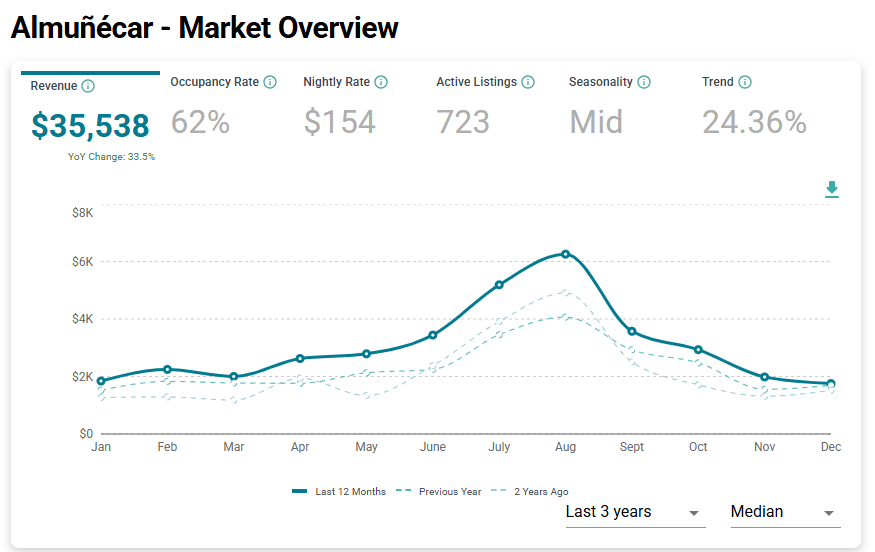
To understand the broader regional pattern, it helps to look at Almuñécar, one of the Costa Tropical’s strongest performing markets over the last three years.
The data below shows median revenue, occupancy, and pricing performance between 2023 and 2025.
Occupancy remains above 60 percent. Average daily rates continue to strengthen. Revenue growth has exceeded 30 percent year on year in recent periods.
The seasonal curve shows strong summer peaks, which is expected in any Mediterranean destination. What is more interesting is the improvement outside peak months. Spring and early autumn are performing better than they did three years ago.
This tells us something important.
The Costa Tropical is not relying on a single peak window. Demand is stretching further across the calendar.
Seasonality That Works With You
Yes, July and August are the strongest months. That will not change.
But this is not a six week gamble. The past three years show a predictable seasonal rhythm:
Spring demand is growing
September and October remain active
Winter keeps baseline bookings rather than dropping off completely
For owners, predictability matters more than dramatic spikes. It allows you to forecast income with confidence rather than hoping for one perfect summer.
What This Means for Current Property Owners
If you already own a property on the Costa Tropical, the numbers show that the region supports short term rental income when properties are positioned correctly.
Properties that consistently perform above average typically have:
Strong location near the coast
Outdoor space or sea views
Updated interiors
Two or three bedroom layouts suited to families and small groups
You do not need a luxury mansion to make this work. Well presented apartments and mid range villas regularly achieve mid five figure annual revenues.
The market is not the limiting factor. Strategy is.
What This Means for Buyers Still Deciding
If you are considering buying in the Costa Tropical, timing becomes part of the decision.
The region sits in an interesting place right now.
It is established enough to show three consecutive years of solid data. At the same time, it is not yet an overcrowded or oversaturated market. Property entry prices remain accessible. Competition is professionalising but still leaves room for well positioned properties to stand out.
Markets evolve in stages. First comes early adoption. Then structured growth. Then saturation.
The Costa Tropical is firmly in the structured growth phase. That is often where the strongest positioning opportunities exist.
So Is Airbnb Profitable on the Costa Tropical?
Yes!
The data from 2023 to 2025 shows consistent revenue growth, stable occupancy, strengthening pricing, and manageable seasonality. The region is not dependent on speculation or extreme tourism spikes. It is building steadily.
But here is the key difference.
Profitability is no longer about whether the Costa Tropical works. It does.The real question is whether your property is prepared to compete properly within it.
Owners who approach this strategically are seeing reliable returns. Buyers who evaluate rental potential before purchasing are positioning themselves intelligently.
The opportunity is not hypothetical.It is visible in the numbers. It is visible in three years of growth. And it is visible in the widening seasonal demand.
The Costa Tropical is no longer undiscovered. But it is also not overcrowded.
That window does not stay open forever.
For owners and investors who want stable growth in a coastal market that is still expanding, the conditions are here. The next step is simply deciding how you want to participate in it.