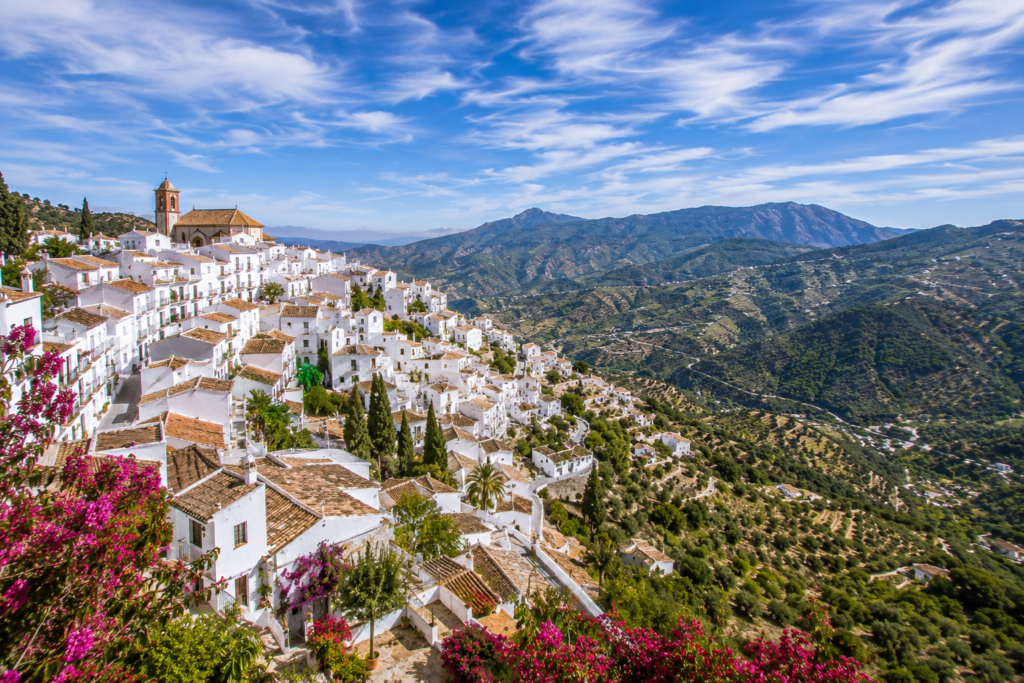
When people imagine Andalusia, they often picture whitewashed houses climbing hillsides, narrow cobbled streets, colourful flower pots, and spectacular mountain views.
In Axarquía, that image comes to life.
Scattered across the region are dozens of traditional pueblos blancos, white villages that have preserved their history, local traditions, and authentic Andalusian character. Each village tells its own story, offering visitors something unique while maintaining the slower pace of life that makes this part of Spain so special.
What makes these villages even more special is that they are still very much lived in. Grandparents gather in the plazas each evening, local bakeries open before sunrise, and many family-run restaurants have been serving the same recipes for generations. Life here follows traditions that have remained largely unchanged for decades.
Visitors often arrive planning a quick day trip and leave wishing they had stayed longer. There is something magical about wandering through narrow alleyways, discovering hidden viewpoints, and experiencing the warm hospitality that defines rural Andalusia.
For travellers looking to explore beyond the beaches, the white villages of Axarquía provide some of the most memorable experiences in the region.
Frigiliana: The Village Everyone Falls in Love With
It is difficult to talk about Axarquía without mentioning Frigiliana. Frequently named one of Spain’s most beautiful villages, it captivates visitors with its immaculate whitewashed houses, colourful flower pots, and labyrinth of cobbled streets.
One of the best ways to experience Frigiliana is simply to put away the map and wander. Around every corner, you’ll find small artisan shops, hidden courtyards, and viewpoints overlooking the Mediterranean Sea. The village feels like an open-air museum, yet it remains wonderfully authentic.
Many visitors tell the same story: they planned to spend just a few hours here but ended up staying all day, enjoying long lunches and watching the sunset from one of the terraces overlooking the coast.
Did You Know?
Frigiliana is famous for its annual Festival of Three Cultures, celebrating the Christian, Muslim, and Jewish communities that once lived together in the region. The entire village transforms into one huge cultural celebration with music, food, and performances.
Cómpeta: The Pearl of Axarquía
Nestled among rolling hills and vineyards, Cómpeta has long been a favourite destination for both locals and international visitors. The village combines traditional Andalusian life with a vibrant creative community, attracting artists, writers, and those looking for a slower pace of living.
Strolling through the village, you’ll notice people gathering in the central square, children playing late into the evening, and cafés filled with conversations that seem to have no sense of urgency. It is this atmosphere that many visitors remember long after returning home.
Wine has played an important role in Cómpeta’s history for centuries. The surrounding hills are dotted with vineyards that produce the region’s famous sweet Moscatel wine, a tradition that remains alive today.
Did You Know?
Every August, Cómpeta hosts the famous Noche del Vino (Night of Wine), one of Andalusia’s oldest festivals, where thousands gather to celebrate local wine, music, and culture.
Sedella: Where Mountains Meet Tranquillity
Sedella may be one of Axarquía’s lesser-known villages, but that is precisely what makes it so special.
Situated near La Maroma, the highest peak in Málaga Province, Sedella offers a peaceful retreat surrounded by spectacular mountain scenery. The village itself is small and charming, with narrow streets, whitewashed homes, and panoramic views that stretch for miles.
Many visitors staying in the area describe waking up to birdsong, enjoying breakfast with mountain views, and ending the day under some of the clearest night skies they have ever seen. It is a completely different experience from the busy coastal resorts and one that encourages visitors to slow down and reconnect with nature.
Our own property, Casa Esta, captures much of this atmosphere, offering guests a chance to experience the tranquillity that makes this part of Axarquía so unique.
Did You Know?
Sedella forms part of the Mudéjar Route, a collection of villages known for their unique architectural influences that blend Islamic and Christian traditions dating back hundreds of years.
Comares: The Balcony of Axarquía
Perched dramatically on a rocky outcrop, Comares is often called the “Balcony of Axarquía”—and for good reason.
The village offers some of the most breathtaking views in the entire region. On clear days, visitors can see rolling hills, olive groves, and even the Mediterranean coastline in the distance.
Comares also carries a strong Moorish heritage. Walking through its winding streets feels like stepping back in time, with decorative tiles marking historical routes and Arabic influences visible throughout the architecture.
One of the most memorable experiences is simply sitting in the village square with a coffee, watching daily life unfold at its own gentle pace.
Did You Know?
Comares sits nearly 700 metres above sea level and was once considered one of the most important defensive strongholds during the Moorish period due to its strategic location.
Canillas de Aceituno: Gateway to La Maroma
At the foot of La Maroma lies Canillas de Aceituno, a village that perfectly combines outdoor adventure with traditional Andalusian charm.
The village has become increasingly popular with hikers and nature lovers, particularly since the opening of the impressive hanging bridge along the El Saltillo trail. Often compared to a smaller version of Caminito del Rey, the route offers spectacular views across the mountains and valleys of Axarquía.
Yet beyond the adventure, Canillas remains deeply rooted in local traditions. Visitors can enjoy authentic tapas bars, friendly village squares, and some of the best mountain cuisine in the region.
Many people come for a hike and leave having discovered one of their favourite villages in southern Spain.
Did You Know?
The El Saltillo suspension bridge near Canillas de Aceituno stretches almost 50 metres across a dramatic gorge, making it one of the longest pedestrian hanging bridges in Spain.

Proudly powered by WordPress